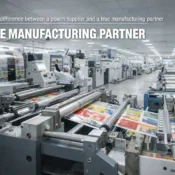

The Quiet Engineering Behind Every Sheet That Survives Heat, Rain, and Relentless Field Use
Some materials look simple until the weather decides to challenge them. Heat softens weak polymers, rain exposes poor lamination, and field conditions punish anything that isn’t engineered with intention. That’s why a strong outdoor sheet is never an accident — it’s the result of quiet engineering done long before the sheet reaches farms, trucks, or construction yards. This understanding is what sets Ashoka Poly Laminators Ltd. apart as a trusted HDPE Tarpaulin Manufacturer, delivering sheets that endure not just seasons but years of real use.
Across India, where climates shift drastically and field conditions are unpredictable, durability becomes the core requirement. A tarpaulin may not look complicated, yet its lifespan is fully defined by microscopic details: polymer quality, tape strength, weave density, bonding consistency, and UV stability. Ashoka Poly Laminators Ltd. has spent years refining these details to manufacture tarpaulins that survive heat, rain, and relentless outdoor stress.
Durability Begins at the Polymer Stage, Not on the Final Roll
The first mistake people make is assuming strength comes from thickness alone. But thickness without purity or proper extrusion means nothing. As a seasoned HDPE Tarpaulin Manufacturer, Ashoka Poly Laminators Ltd. has long prioritized virgin HDPE granules, stable additives, and uniform tape extrusion.
Pure polymers stretch better, resist cracking, and maintain flexibility through temperature changes. Impure or recycled blends, on the other hand, become brittle under sunlight or moisture. That brittleness is often why low-grade sheets tear easily or develop cracks after a few days of extreme weather.
APL ensures that strength begins before weaving even starts — inside the extrusion line where tapes gain their first structural integrity.
Woven Structure: The Backbone of Real-World Performance
Once the polymer is extruded, the strength of a tarpaulin depends on the weaving pattern. A tight weave, evenly distributed across the fabric, gives the sheet the ability to resist tearing when pulled, bent, tied, or stretched. Ashoka Poly Laminators Ltd., operating as a highly dependable HDPE Tarpaulin Manufacturer, uses circular looms to maintain consistent density throughout the fabric.
Loose weaving creates empty pockets where tension builds, and tears begin. Tight weaving spreads force across hundreds of contact points. This single detail can be the difference between a sheet lasting one season or several years. APL designs its weave for actual field conditions — whether it’s covering trucks, handling monsoon storms, or protecting agricultural goods.
Lamination: The Shield That Keeps Everything Together
The weather isn’t kind. Water can seep into the smallest gaps. Sunlight can degrade unprotected material. Dust can wear down surfaces. That’s where lamination becomes essential. A high-quality lamination bond prevents water absorption, stops UV rays from attacking the sheet directly, and protects the woven core from environmental damage.
As a dedicated HDPE Tarpaulin Manufacturer, Ashoka Poly Laminators Ltd. applies dual-sided LDPE lamination with consistent bonding. Weak lamination is what causes peeling, bubbling, and premature cracking. APL’s careful lamination process ensures that the protective layer stays attached even after repeated folding, sunlight exposure, and tension stress.
This invisible layer is often what helps a sheet survive the harshest seasons.
UV Stability: The Hidden Science Behind Longevity
UV resistance isn’t a feature — it’s a necessity for outdoor life. The sun’s UV rays break down polymers at a molecular level, causing fading, brittleness, and cracks. As a quality-focused HDPE Tarpaulin Manufacturer, Ashoka Poly Laminators Ltd. integrates UV stabilizers during the lamination stage to prevent this degradation.
The result is a sheet that does not turn powdery or fragile under intense heat. This is especially crucial in states like Rajasthan, Gujarat, Telangana, and parts of Maharashtra, where tarpaulins face prolonged sunlight. UV stability alone can double the lifespan of a tarpaulin, making it a deciding factor for buyers who rely heavily on outdoor protection.
Why Cheap Tarpaulins Fail Under Real Pressure
Many low-cost tarpaulins look similar from a distance. Their surface may appear thick, their color bright, and their weight convincing. But actual performance doesn’t come from looks. It comes from internal engineering.
Sheets made from mixed plastic granules cannot survive tension.
Sheets with weak bonding peel as soon as the humidity increases.
Sheets with poor weaving tear when pulled or tied tightly.
Sheets without UV stability become brittle within weeks.
Businesses that depend on tarpaulins cannot afford these failures. That’s why so many companies across India prefer Ashoka Poly Laminators Ltd., a reliable HDPE Tarpaulin Manufacturer, because the products behave exactly as expected under demanding field conditions.
Industries That Push Tarpaulins to Their Limit
Every sector tests tarpaulins differently. Agriculture exposes sheets to moisture, heat, mud, and handling stress. Transport fleets test sheets through wind load, road vibration, and long-distance journeys. Construction sites push sheets into abrasive contact with metal, cement, and tools. Warehouses rely on sheets to withstand seasonal dust and rain.
Ashoka Poly Laminators Ltd. has engineered its tarpaulins to cope with all these conditions, making the brand a trusted name wherever long-term protection matters. The company’s experience as an established HDPE Tarpaulin Manufacturer allows it to adapt to each industry’s unique challenges with stable quality.
Field Use Reveals What Factory Tests Cannot.
Laboratory tests can predict strength, but field use reveals truths that numbers cannot. Real weather is unpredictable. Field handlers are rough. Materials experience twisting, pulling, dragging, and stretching in ways that machines cannot simulate. Ashoka Poly Laminators Ltd. designs tarpaulins with these realities in mind, ensuring that sheets remain flexible, durable, and reliable even after months of use.
This is where engineering truly becomes visible. A sheet that still maintains its waterproofing, lamination, flexibility, and color after facing harsh weather is proof of disciplined manufacturing — something a professional HDPE Tarpaulin Manufacturer delivers consistently.
The Future of Outdoor Protection Belongs to Smarter Materials
India’s climate continues to evolve. Summers are getting hotter. Monsoons are becoming heavier. Industries are expanding into more challenging environments. In this landscape, the role of advanced HDPE tarpaulins will only grow.
Ashoka Poly Laminators Ltd., as a future-focused HDPE Tarpaulin Manufacturer, continues to upgrade its production systems to meet these new demands. Smarter materials, better stabilizers, stronger bonding, and improved weaving technology will define the next generation of tarpaulins.
Strength will no longer be measured in thickness.
It will be measured in engineering.
Looking for bulk tarpaulin or packaging solutions?
Contact Ashoka Poly Laminators Ltd. – India’s trusted manufacturer for durable, export-quality tarpaulins and retail packaging.
📧 Email: apl@ashokafoam.com
📞 Phone: +91 7078666249

Recent Posts

How emerging brands can build a strong foundation with the right packaging strategy
Inside the operations of a modern packaging production facility