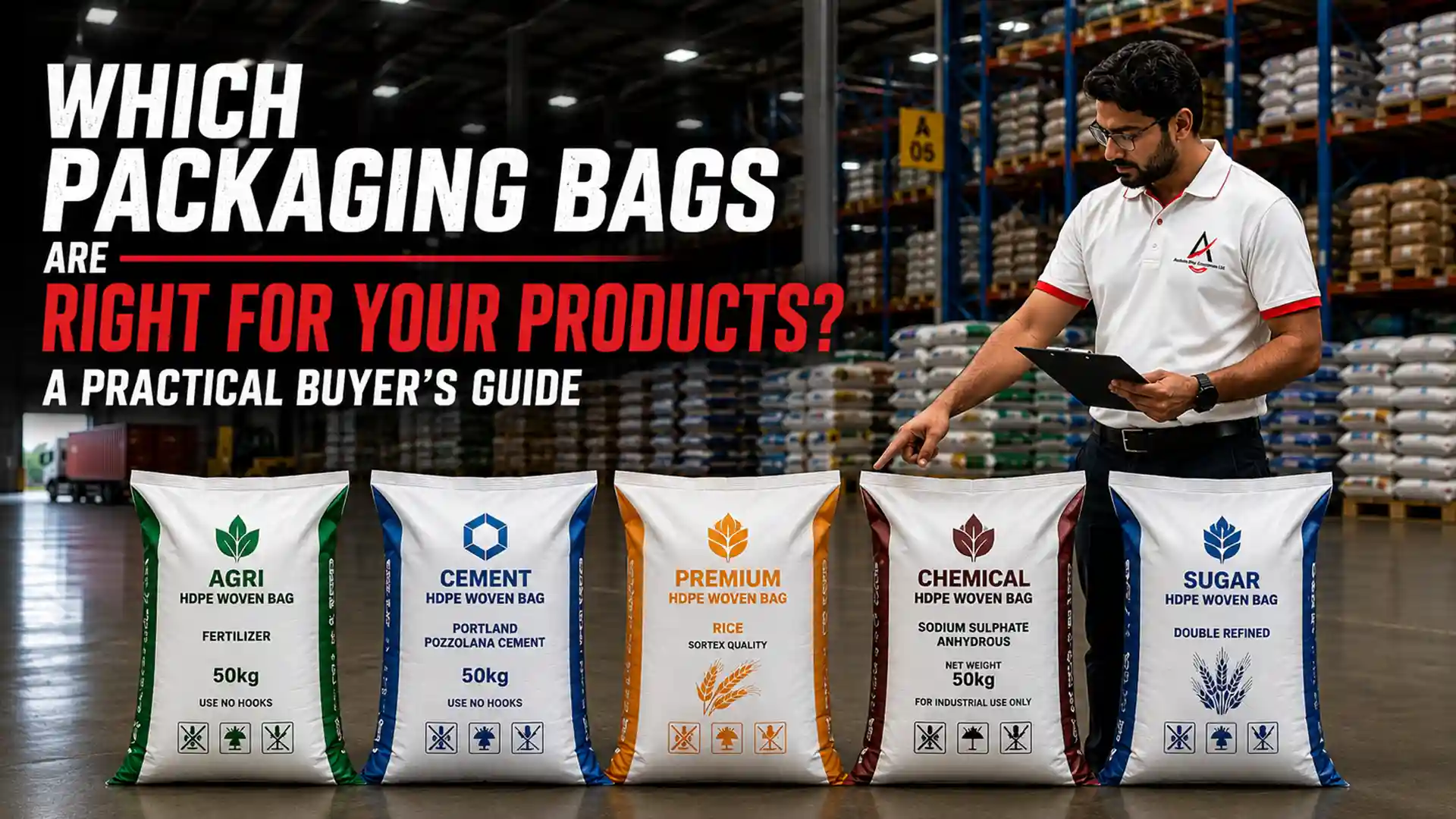
Which packaging bags are right for your products? A practical buyer’s guide
Choosing packaging seems simple until it starts affecting product quality, transportation costs, warehouse efficiency, and customer satisfaction. Many businesses focus on the product they manufacture but spend very little time understanding the packaging that protects it.
That is one reason HDPE Bags have become one of the most widely used packaging solutions across industries. Whether the product is agricultural produce, industrial raw materials, chemicals, animal feed, food ingredients, or construction materials, the right packaging ensures it reaches its destination safely.
However, not every woven bag delivers the same performance. Material quality, manufacturing methods, stitching, lamination, and application all influence how well the packaging performs. This guide explains everything buyers should know before investing in HDPE Bags, helping businesses make informed decisions instead of relying only on price.
Why are woven bags used across so many industries?
Imagine transporting hundreds of kilograms of products every day. The packaging has to withstand lifting, stacking, transportation, storage, and changing weather conditions without creating unnecessary losses.
That is exactly where woven packaging proves its value.
Unlike ordinary packaging materials, woven bags are designed to combine strength with flexibility. They are lightweight enough to reduce transportation costs while remaining durable enough to carry demanding industrial products.
This balance has made HDPE Bags a preferred packaging solution for businesses that require dependable performance throughout the supply chain.
At Ashoka Poly Laminators, understanding how customers actually use packaging is considered just as important as manufacturing the bags themselves. Every industry faces different operational challenges, and packaging should support those requirements rather than complicate them.
What makes these bags different from ordinary plastic bags?
Many people assume every plastic bag performs the same function.
In reality, woven industrial packaging is manufactured very differently.
High-density polyethylene resin is converted into narrow tapes through an extrusion process. These tapes are stretched to improve strength before being woven together on specialised looms, creating a fabric that combines durability with flexibility. Depending on customer requirements, the woven material may then be laminated, printed, stitched, or fitted with liners.
The result is packaging that performs far beyond the capabilities of conventional plastic bags.
Because Ashoka Poly Laminators controls every stage of manufacturing, businesses receive packaging that maintains consistent quality across repeated production runs.
That manufacturing consistency is one of the reasons buyers continue choosing HDPE Bags for demanding industrial applications.
Where are these bags commonly used?
One reason woven packaging remains so popular is its adaptability.
Instead of being limited to one sector, it serves a wide variety of industries with different operational requirements.
Agriculture relies on woven bags for grains, seeds, rice, pulses, fertilizers, and animal feed. Food manufacturers package flour, sugar, spices, and other ingredients using similar solutions. Chemical companies require durable packaging for powders and granules, while construction businesses depend on strong bags for cement, sand, minerals, and related materials.
Exporters also appreciate woven packaging because it provides dependable protection during long-distance transportation.
Rather than producing one standard product for every customer, Ashoka Poly Laminators works with businesses to understand how the packaging will actually be used before recommending suitable specifications.
Why quality matters more than price
Every procurement team wants competitive pricing. However, experienced buyers know that the cheapest packaging often becomes the most expensive option over time. Lower-quality packaging may appear economical initially, but it often leads to operational issues that increase overall costs.
Common problems associated with poor-quality packaging include:
- Weak stitching that can result in product leakage during handling or transportation.
- Poor weaving that reduces the bag’s load-bearing capacity.
- Inferior raw materials that affect durability and shorten the product’s lifespan.
- Inconsistent dimensions that interrupt filling and packing operations.
- Low-quality printing that weakens brand presentation and product identification.
Each of these issues can increase operational expenses far beyond the original purchase price. Instead of focusing only on the lowest quotation, businesses investing in HDPE Bags should evaluate overall value, manufacturing quality, and long-term reliability.
At Ashoka Poly Laminators, the emphasis is on delivering consistent manufacturing quality and dependable performance rather than simply producing low-cost packaging. This approach helps customers reduce packaging-related challenges while improving efficiency across the supply chain.
How can buyers identify a good packaging solution?
A good packaging solution should match the product it is protecting.
For example, a company packaging agricultural products may prioritise breathability and strength, while a food manufacturer may require additional moisture resistance and superior printing quality. Construction materials often demand higher load-bearing capacity, whereas export products may need packaging capable of maintaining consistent performance during extended transportation.
Before placing an order, buyers should consider product weight, storage conditions, transportation methods, environmental exposure, and branding requirements.
These practical considerations help determine whether HDPE Bags are suitable and what specifications will deliver the best results.
This customer-focused consultation process is something Ashoka Poly Laminators believes should be part of every packaging discussion rather than an afterthought.
Why does the manufacturer matter?
Two packaging products may appear almost identical in photographs but perform completely differently in real-world conditions.
The difference usually lies inside the manufacturing process.
Raw material quality, weaving technology, machine calibration, quality inspection, and production standards all influence the final product.
An experienced manufacturer maintains consistency not only during one production run but across every future order.
That consistency simplifies procurement because businesses know exactly what to expect every time they reorder.
For this reason, many organisations choose Ashoka Poly Laminators as their long-term packaging partner. The company combines technical expertise with modern manufacturing practices to produce HDPE Bags that support industrial performance instead of becoming a source of operational problems.
Common misconceptions buyers should avoid
One common misconception is that all woven bags are identical.
Another is that thicker packaging automatically means better packaging.
In reality, the right solution depends on the intended application. Material quality, weaving density, stitching, lamination, and manufacturing consistency often matter more than appearance alone.
Another mistake is selecting packaging without considering future production growth. Businesses that expect increasing demand benefit from working with manufacturers capable of maintaining consistent specifications over the long term.
Ashoka Poly Laminators helps customers avoid these issues by understanding both present requirements and future production goals before manufacturing begins.
Frequently asked questions
Are HDPE bags waterproof?
Standard woven bags offer basic protection, while laminated versions provide improved resistance to moisture and environmental exposure.
Can they be customised for different products?
Yes. They can be manufactured in different sizes, colours, strengths, laminations, and printed designs according to specific product requirements.
Are they suitable for export shipments?
Yes. When manufactured to the correct specifications, they perform well for domestic and international transportation.
How long do they last?
Their lifespan depends on the product application, storage conditions, handling practices, and manufacturing quality.
Why choose Ashoka Poly Laminators?
Ashoka Poly Laminators combines modern manufacturing technology, strict quality control, customisation expertise, and dependable production capabilities to deliver packaging solutions that meet the practical needs of industrial businesses.
Final thoughts
Choosing the right packaging is not simply about buying bags—it is about protecting products, improving operational efficiency, reducing losses, and supporting business growth. By understanding how woven packaging is manufactured, where it is used, and what quality factors truly matter, buyers can make decisions that deliver long-term value instead of short-term savings.
If you are looking for reliable HDPE Bags for agriculture, food processing, chemicals, construction materials, exports, or industrial packaging, Ashoka Poly Laminators offers customised manufacturing solutions backed by consistent quality, technical expertise, and years of industry experience. Along with HDPE Bags, the company also manufactures laminated pouches, BOPP woven bags, flexible packaging solutions, industrial packaging products, and Double Kissan Tarpaulin by APL to meet diverse packaging requirements.
Contact Ashoka Poly Laminators
Phone: +91 7078666249
Email: apl@ashokafoam.com

Recent Posts
Festive dispatches are growing—can your tarpaulin handle the journey?
Festive sweets need more than a pretty pouch—what keeps them protected?