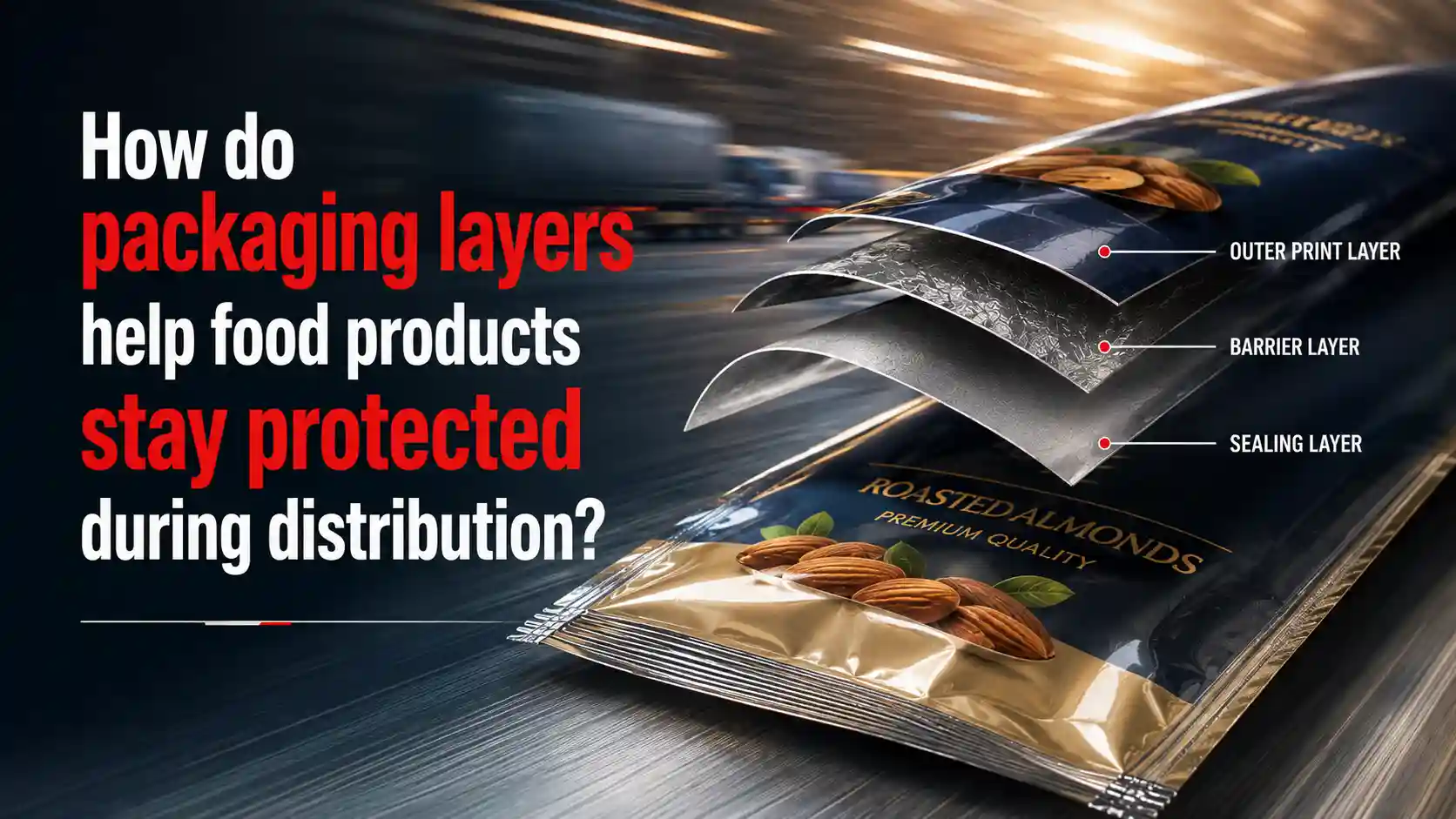
How do packaging layers help food products stay protected during distribution?
A food product can leave a manufacturing facility in perfect condition and still face many challenges before reaching the consumer. It may spend time in storage, travel through different climates, move between warehouses, and experience repeated handling along the way. Packaging has to help maintain the condition of the product throughout this journey.
Ashoka Poly Laminators develops flexible packaging solutions with this distribution journey in mind. Laminated Food Packaging is particularly useful because different layers can perform different functions within the same structure. One layer may provide strength, another may support sealing, while another helps create a barrier against environmental factors that can affect the packed food.
Understanding these roles explains why packaging structure matters just as much as its appearance.
Food protection starts with controlling the outside environment
Food products do not exist in isolation once they are packed. The surrounding environment can contain moisture, oxygen, light, dust, and other factors that may influence product quality over time.
The purpose of a layered structure is to create a more controlled environment around the product.
For example, a food product that is sensitive to moisture may require a packaging structure that limits moisture transmission. Another product may require stronger protection from oxygen or light. The appropriate structure therefore depends on what the food needs throughout its expected storage and distribution period.
This is where Laminated Food Packaging becomes useful. Instead of expecting one material to provide every required characteristic, manufacturers can combine materials with complementary properties.
One layer does not have to do everything
The strength of a laminated structure comes from combining different functions.
A typical flexible food packaging structure may include layers selected for specific purposes. One can contribute mechanical strength, another can provide a suitable surface for printing, while another can support heat sealing or barrier performance.
These layers work together rather than independently.
Ashoka Poly Laminators considers the intended food application when developing laminated structures because the right combination depends on factors such as product sensitivity, storage conditions, filling requirements, and distribution duration.
For businesses evaluating Laminated Food Packaging, this layered approach can provide greater flexibility than relying on a single material to meet every requirement.
Moisture can change the condition of food
Moisture is one of the most important environmental factors for many packaged foods.
Products such as powders, snacks, dry mixes, spices, and other moisture-sensitive foods can experience changes in texture or quality when exposed to unwanted moisture. Even when the food itself is manufactured correctly, inadequate packaging can make maintaining its intended condition more difficult.
A suitable laminated structure can help create a barrier between the product and the external environment.
The exact material combination should depend on the food and its expected conditions rather than following one universal specification. Laminated Food Packaging therefore needs to be developed around the product’s actual moisture sensitivity, storage duration, and distribution environment.
Oxygen can matter even when the package looks perfect
A package may appear completely intact while gases from the surrounding environment gradually interact with the product.
For certain foods, oxygen exposure can influence freshness, flavour, aroma, or other quality characteristics. This makes barrier performance an important consideration when selecting packaging for products with specific sensitivity to oxygen.
Layer selection can help manufacturers create structures suited to these requirements.
At Ashoka Poly Laminators, packaging discussions can take into account the nature of the food product and the conditions it is expected to encounter. This helps businesses consider Laminated Food Packaging as a functional barrier system rather than simply a printed outer wrapper.
Light can be another consideration
Not every food product responds to light in the same way.
For products that require greater protection from light exposure, the packaging structure can play an important role in limiting that exposure. This can be particularly relevant when products spend extended periods in warehouses, transportation vehicles, retail environments, or other areas where light conditions vary.
The appropriate approach depends on the product and its intended shelf life.
This is another reason Laminated Food Packaging cannot be selected purely by appearance. The visible design is important, but the structure behind that design may be responsible for much of the product’s protection.
Distribution creates physical pressure too
Environmental protection is only part of the challenge.
Food packages are also handled physically throughout distribution. Filled pouches or bags may be packed into cartons, stacked, moved through warehouses, loaded onto vehicles, and transported over varying distances.
During this process, the packaging can experience compression, bending, friction, and repeated movement.
A well-designed laminated structure needs to provide an appropriate balance between barrier performance and physical usability. The packaging should remain practical during filling, sealing, transportation, and storage.
Ashoka Poly Laminators considers these operational requirements when developing flexible food packaging, helping businesses select structures that are suited to the complete distribution process.
Sealing is where the packaging finally closes the system
Even a carefully selected material structure cannot perform as intended if the package is not sealed properly.
The seal creates the closure between the inside of the package and the external environment. Its performance can therefore influence product protection throughout storage and distribution.
Packaging requirements should consequently consider the filling and sealing process as well as the material structure itself.
Businesses using Laminated Food Packaging should discuss how the packaging will be filled, sealed, stored, and transported. These details help manufacturers understand the practical conditions the finished package needs to handle.
At Ashoka Poly Laminators, these application details form an important part of developing packaging solutions rather than treating the laminated material as an isolated component.
The same food may travel through several environments
Consider a packaged food product moving from a manufacturing facility to a regional warehouse, then to a distributor and finally to a retail outlet.
The product may experience changes in temperature, humidity, handling frequency, and storage conditions during this journey.
The packaging cannot control the entire environment, but an appropriately designed structure can help reduce the impact of external conditions on the product.
This is why Laminated Food Packaging should be evaluated according to the complete distribution route rather than only the conditions inside the production facility.
Ashoka Poly Laminators works with businesses to understand these practical requirements so packaging decisions are connected to how the product will actually move through the market.
Good packaging design begins with the food itself
There is no single laminated structure that is automatically suitable for every food product.
A dry snack, powdered ingredient, spice, processed food, or other packaged product may have different requirements. Product sensitivity, expected shelf life, pack size, filling process, distribution conditions, and storage environment can all influence the appropriate structure.
This makes product information essential when discussing packaging requirements.
Instead of asking for a generic Laminated Food Packaging solution, businesses can provide details about the food, its expected shelf life, distribution route, and handling conditions. This gives the manufacturer a much clearer basis for discussing suitable materials and construction.
Packaging performance should continue after the factory
The real measure of food packaging is not how it performs on the production line alone.
It needs to remain functional during transportation, storage, distribution, and retail handling. Its barrier properties, physical construction, sealing, and printed surface all contribute to how the finished product reaches the customer.
Ashoka Poly Laminators approaches flexible food packaging with this complete journey in mind. By considering material layers alongside manufacturing and application requirements, the company helps businesses develop packaging that supports product protection from production through distribution.
For companies evaluating Laminated Food Packaging, this broader perspective can make the difference between simply packaging a product and creating a structure designed around its actual journey.
Final takeaway
Food packaging performs several jobs simultaneously. It needs to protect the product from environmental exposure, withstand physical handling, maintain its seal, carry product information, and remain practical throughout distribution.
The value of Laminated Food Packaging comes from bringing these functions together through carefully selected layers rather than expecting one material to solve every requirement. Ashoka Poly Laminators develops Flexible Food Packaging Solutions around product characteristics, storage conditions, filling requirements, and distribution needs, helping businesses create packaging that supports food quality throughout its journey to the customer.
Contact Ashoka Poly Laminators
If you are developing food packaging for a new product or looking to improve an existing packaging structure, Ashoka Poly Laminators can discuss your product characteristics, filling requirements, barrier needs, printing specifications, and expected distribution conditions.
Phone: +91 7078666249
Email: apl@ashokafoam.com
Contact Ashoka Poly Laminators to discuss your food packaging requirements and request a customised quotation.

Recent Posts

Festive dispatches are growing—can your tarpaulin handle the journey?

Festive sweets need more than a pretty pouch—what keeps them protected?