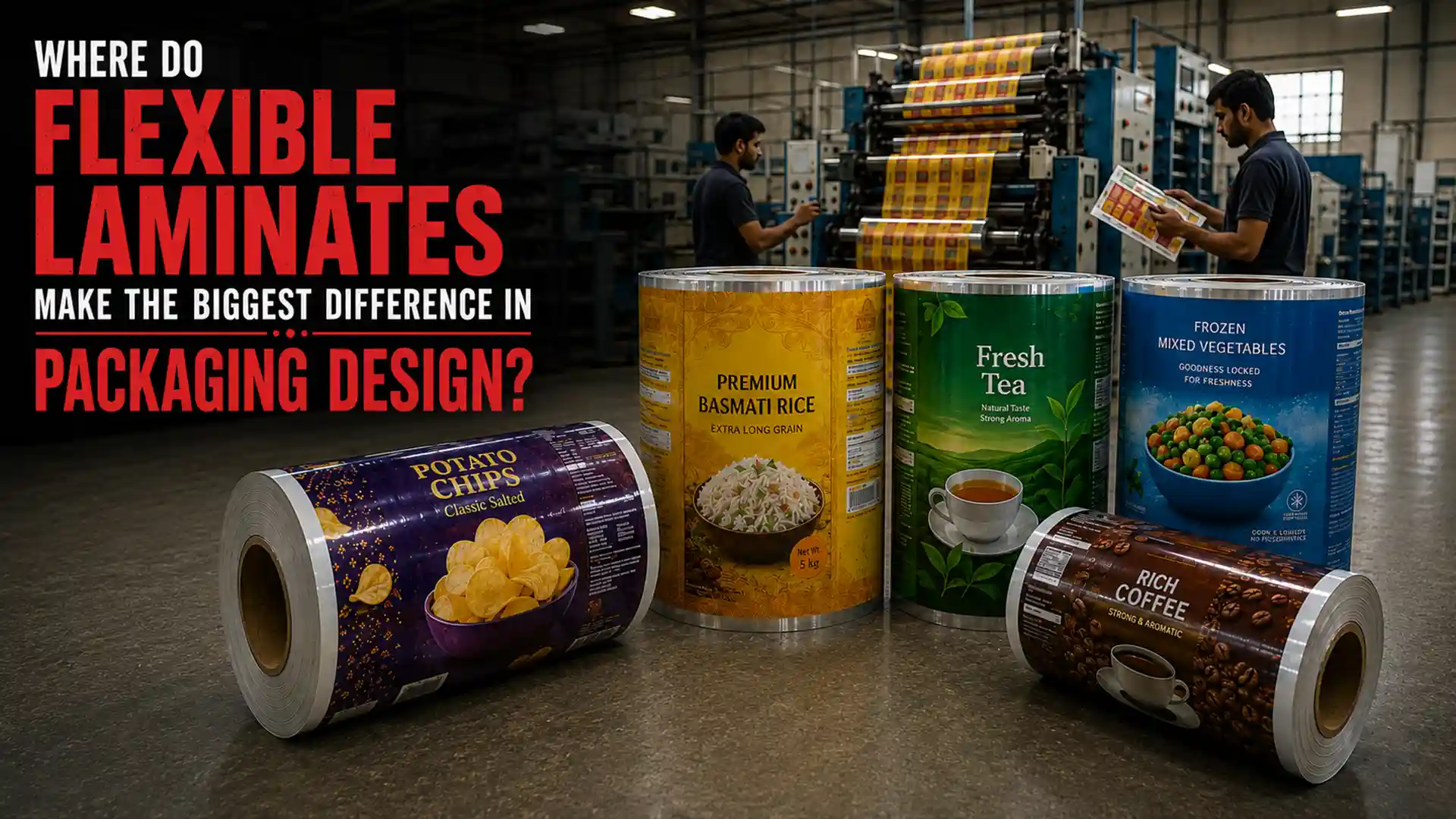
Where do Flexible Laminates make the biggest difference in packaging design?
Packaging design is not simply about creating an attractive outer layer. The material structure has to work with the product, filling process, storage conditions, transportation requirements, and the way the package will eventually be handled by consumers or businesses.
This is where Flexible Laminates can make an important difference. By combining different material layers, packaging designers can develop structures suited to specific protection and presentation requirements instead of relying on a single material for every function.
For businesses developing or improving flexible packaging, the key question is not whether more layers are automatically better. It is where each layer adds useful performance and how the finished structure fits the product.
Start with what the product needs protection from
Every packaging application has its own priorities.
A food product may need protection against moisture, oxygen, light, or aroma loss. A dry product may require a different barrier balance from a product containing oils or volatile ingredients. Industrial products can have their own handling and protection requirements.
The packaging structure should therefore begin with the product rather than the appearance of the finished pack.
When Flexible Laminates are selected according to these requirements, each material layer can contribute a specific function within the overall structure.
Different layers can perform different jobs
One of the major advantages of laminated structures is that different materials can be combined to achieve complementary characteristics.
One layer may provide printability, another may contribute mechanical strength, while another may improve barrier performance or sealing behaviour.
This means packaging designers do not necessarily have to depend on one material to provide every required property.
The appropriate structure depends on the application. A pack designed for dry food, for example, may require a different material combination from packaging intended for another product category.
Barrier performance can influence product life
For many packaged products, the environment outside the package can affect quality.
Moisture, oxygen, light, and other external factors may influence the condition of the contents during storage and distribution. Packaging design can therefore play an important role in maintaining the desired product characteristics.
The barrier requirement should be established according to the product and its expected shelf-life conditions.
This is one area where Flexible Laminates can provide design flexibility because different material combinations can be considered according to the protection required.
Printing becomes part of the packaging experience
Packaging often has to perform two jobs at the same time: protect the product and communicate its identity.
The outer surface may carry branding, product information, graphics, usage instructions, regulatory details, or other important content. For consumer-facing products, print quality can also influence how the package is perceived on the shelf.
A suitable laminate structure needs to accommodate the intended printing process while maintaining the required appearance after production, handling, and transportation.
For brands investing in packaging design, this makes print compatibility an important consideration from the beginning rather than something added after the structure has already been selected.
Sealing requirements should not be overlooked
A package can have an excellent printed surface and still perform poorly if its sealing characteristics do not match the filling process.
The package may need to form reliable seals at particular temperatures and speeds, depending on the machinery and product being packed. The sealing layer therefore needs to work with the production environment.
This is especially important for businesses operating automated packaging lines.
When developing Flexible Laminates, the relationship between material structure and machinery should be considered early so that the finished packaging supports the filling and sealing process.
Packaging design also affects handling
A package does not remain stationary after production.
It may be packed into cartons, transported through warehouses, stacked with other products, handled by distributors, and displayed before reaching the end user.
During this journey, the structure needs to maintain its intended appearance and functional properties.
The required mechanical performance can therefore influence material selection. A packaging format designed for a demanding distribution environment may need different structural considerations from one intended for a short and controlled supply chain.
Material selection should follow the application
There is no single laminate structure that works equally well for every product.
Packaging designers need to consider factors such as:
- Product characteristics
- Required barrier properties
- Filling and sealing conditions
- Expected shelf life
- Printing requirements
- Transportation and storage environment
- Final pack format
These factors help determine which combination of materials is appropriate.
Instead of asking for the thickest or most complex structure available, buyers should identify the performance characteristics that are actually necessary for their application.
A food packaging example
Consider a packaged food product that needs to maintain its quality during storage and distribution.
The packaging may need to provide a suitable barrier against external conditions while also supporting clear graphics, reliable sealing, and practical handling.
If the product is distributed across different regions, transportation and storage conditions may further influence the material requirements.
In this situation, the laminate structure becomes part of the product-protection strategy rather than simply an attractive outer package.
This illustrates why Flexible Laminates should be developed around the product’s complete packaging journey.
The structure can influence pack efficiency
Packaging design also involves balancing performance with practical material use.
Using more material does not automatically create a better package. An unnecessarily complex structure can add cost or material without providing a meaningful benefit for the application.
The goal should be to select a structure that provides the required performance without adding unnecessary characteristics.
This is where communication between the packaging buyer, product team, and manufacturer becomes valuable. Understanding the actual requirements allows the structure to be evaluated based on function.
Where do manufacturers add value?
A Packaging Manufacturer can contribute practical knowledge during the development stage.
The discussion can cover the product, required pack format, filling machinery, printing requirements, expected storage conditions, and distribution environment. These details help translate a general packaging idea into a manufacturable structure.
Ashoka Poly Laminators works with businesses on flexible packaging requirements by considering the relationship between material selection, printing, lamination, and the intended application.
The manufacturer’s role is not simply to produce the finished packaging. Early technical discussion can also help identify whether the proposed structure makes sense for the customer’s operating conditions.
Avoid choosing a structure from appearance alone
A package may look excellent in a sample and still be unsuitable for the actual production environment.
For example, a design may require a particular sealing performance that has not been considered, or the product may need a barrier property that the selected structure does not adequately address.
This is why packaging development should evaluate both visual and functional requirements.
The strongest design is one where appearance, product protection, manufacturing compatibility, and distribution requirements work together.
Flexible packaging materials need a purpose
Every layer in a laminated structure should have a reason for being there.
Some layers may support printing, others protection, strength, or sealing. The final combination should reflect what the package needs to accomplish rather than follow a generic formula.
This approach can also make procurement discussions clearer because buyers can evaluate a proposed structure based on specific performance requirements.
For companies developing new products or updating existing packaging, defining those requirements before production can reduce unnecessary changes later.
Final thoughts
Flexible Laminates can make the biggest difference when packaging needs to combine several functions within one practical structure. Barrier protection, printing, mechanical performance, sealing, and application-specific requirements can all influence how the final material combination is developed.
The right structure is not necessarily the most complicated one. It is the one that provides the properties required by the product, filling process, storage environment, transportation route, and final pack format.
At Ashoka Poly Laminators, flexible packaging requirements can be approached by considering these factors together, helping businesses develop packaging structures that are aligned with their actual applications rather than relying on a generic material specification.
Contact Ashoka Poly Laminators
If you are developing flexible packaging or reviewing an existing structure, share your product type, pack format, filling method, printing requirements, and expected storage conditions with Ashoka Poly Laminators.
Phone: +91 7078666249
Email: apl@ashokafoam.com
Discuss your flexible packaging requirement and explore a suitable material structure.

Recent Posts

Festive dispatches are growing—can your tarpaulin handle the journey?

Festive sweets need more than a pretty pouch—what keeps them protected?