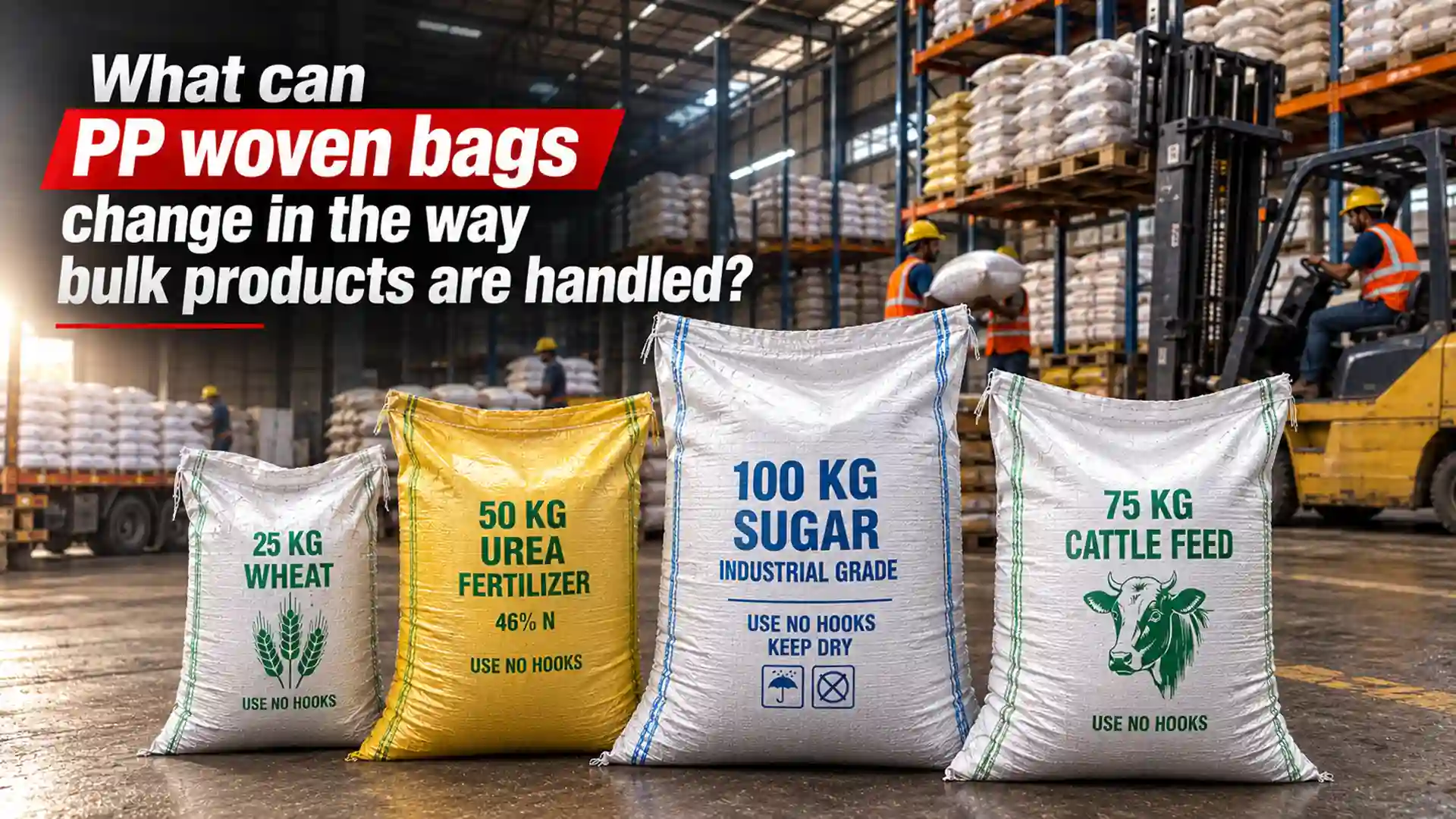
What can PP woven bags change in the way bulk products are handled?
Bulk products place very different demands on packaging compared with individually packed goods. A bag may need to hold a substantial quantity of material, remain manageable during lifting, tolerate repeated movement, and stay organised while products move through warehouses and transportation networks.
This is where choosing the right PP Woven Bags Supplier can influence more than the packaging itself. The bag’s dimensions, construction, stitching, filling format, and intended application can all affect how efficiently bulk products are handled from the production floor to their final destination.
For manufacturers and distributors, the important question is not simply whether a bag can hold the material. It is whether the packaging format fits the entire handling process.
Bulk handling starts at the filling point
The first major interaction between a bulk product and its packaging happens during filling.
The bag needs to accommodate the required quantity while working with the available filling equipment or manual process. Dimensions and opening design can affect how easily material enters the bag and how efficiently operators can complete the filling cycle.
A bag that does not match the filling process can create unnecessary adjustments, even when its basic carrying capacity is suitable.
An experienced PP Woven Bags Supplier should therefore understand the filling environment before finalising the bag specification.
The shape of a filled bag matters
Once filled, a bag behaves differently from an empty piece of woven material.
The product inside creates pressure against the fabric, while the finished shape influences how bags can be positioned and stacked. Consistent dimensions can make warehouse organisation easier because filled units can be arranged more predictably.
This becomes particularly useful for businesses handling large quantities of agricultural products, animal feed, fertiliser, grains, or industrial materials.
The objective is not simply to make a larger bag. It is to create a packaging format that works with the way the filled product will actually be moved and stored.
Stacking becomes part of warehouse planning
Bulk packaging can directly influence how efficiently available warehouse space is used.
Filled bags may be stacked on pallets or arranged in designated storage areas. Their dimensions, shape, and filled condition can affect how neatly those units can be positioned.
A well-considered bag specification can therefore support more organised storage.
Ashoka Poly Laminators considers the intended storage and handling environment when discussing woven packaging requirements, because a bag’s usefulness extends beyond its performance at the filling stage.
Transport introduces another set of demands
After storage, the filled bags may travel considerable distances.
During loading and unloading, they can be lifted, shifted, stacked, and repositioned. Once inside a vehicle, movement and vibration can place additional stress on the packaging and its closure points.
The transportation method therefore needs to be considered during bag selection.
A business sending bulk material across the country may have different requirements from one supplying nearby customers. Understanding that difference helps create a more appropriate packaging specification.
For a PP Woven Bags Supplier, knowing the intended distribution route can be just as useful as knowing the product weight.
Handling becomes easier when the format is practical
Bulk packaging has to work for people as well as products.
Operators may need to lift filled bags, move them using equipment, arrange them for storage, or prepare them for dispatch. The bag format can influence how easily these tasks are completed.
Details such as dimensions, weight, closure, and handling arrangements can therefore have an operational impact.
When businesses evaluate woven packaging, they should consider who will handle the filled bags and how frequently those movements will occur.
Different products require different approaches
There is no universal woven bag specification for every bulk material.
A grain product may need a different format from fertiliser. Animal feed may have different handling requirements from an industrial raw material. Even two products with the same approximate weight can require different packaging depending on their particle characteristics and distribution conditions.
For example, a fine powder may behave differently during filling and handling from a coarse agricultural material.
This is why PP Woven Bags Supplier selection should begin with the application rather than a standard bag size.
Printing can support identification during handling
Bulk packaging is not always intended primarily for retail shelves.
In industrial and agricultural supply chains, printed information can help identify the product, communicate specifications, distinguish product grades, and reinforce brand identity.
When many bags move through warehouses simultaneously, clear identification can make product organisation easier.
Ashoka Poly Laminators can incorporate printing requirements into the packaging discussion so that the visual information is considered alongside the physical bag construction.
What happens when storage lasts for weeks?
A bulk product may not move immediately from the filling line to the customer.
It could remain in a warehouse for weeks or longer before dispatch. During that period, bags may be stacked, moved, inspected, or rearranged.
Storage duration and environment should therefore form part of the initial packaging discussion.
Temperature, humidity, stacking arrangements, and indoor or outdoor storage can all affect the conditions surrounding the filled packaging.
A PP Woven Bags Supplier that understands these conditions can better align the proposed specification with the actual supply chain.
A simple example: agricultural material
Imagine an agricultural business packing a bulk product for distribution across several regions.
The bags are filled at the production facility, placed into organised storage, loaded onto trucks, transported to distributors, and then moved again before reaching customers.
The packaging is involved at every stage.
If the bag is designed only around its filling capacity, important handling requirements may be overlooked. But if the specification considers filling, stacking, movement, transportation, and storage together, the packaging becomes part of a more efficient material-handling system.
That broader approach is particularly useful for recurring bulk orders.
What should buyers discuss before ordering?
Before approaching a PP Woven Bags Supplier, procurement teams can prepare a straightforward specification covering the product, approximate fill weight, bag dimensions, filling method, storage environment, transportation conditions, and expected order volume.
It is also useful to explain whether the packaging will be handled manually or mechanically and whether printed identification is required.
These details help the manufacturer understand the job the bag needs to perform.
For Ashoka Poly Laminators, this application information provides a practical basis for discussing woven packaging requirements instead of relying on a generic specification.
The real benefit is coordination
A bulk bag does not solve one problem.
It becomes part of a chain that includes filling, handling, storage, loading, transportation, unloading, and final delivery. Improving the packaging format can therefore influence several stages at once.
That does not mean every business needs a more complex bag. It means the bag should be selected according to the actual operating conditions.
The right PP Woven Bags Supplier can help buyers connect those requirements and establish a specification that makes sense for the complete material-handling cycle.
Final thoughts
PP woven packaging can influence how bulk products move through a business long before they reach the customer. The right format can support smoother filling, organised stacking, practical storage, easier identification, and more predictable handling during transportation.
For businesses purchasing in volume, choosing a PP Woven Bags Supplier should therefore involve more than comparing prices. The conversation should cover the product, filling process, dimensions, storage conditions, transportation route, handling method, and expected order frequency.
Ashoka Poly Laminators works with businesses to understand these application requirements and develop woven packaging around the actual movement of their products.
Contact Ashoka Poly Laminators
If your business handles bulk agricultural, industrial, or commercial materials and you are reviewing your Woven Packaging requirements, contact Ashoka Poly Laminators.
Phone: +91 7078666249
Email: apl@ashokafoam.com
Share your product and handling requirements to discuss a suitable packaging specification and bulk quotation.

Recent Posts
Festive dispatches are growing—can your tarpaulin handle the journey?
Festive sweets need more than a pretty pouch—what keeps them protected?