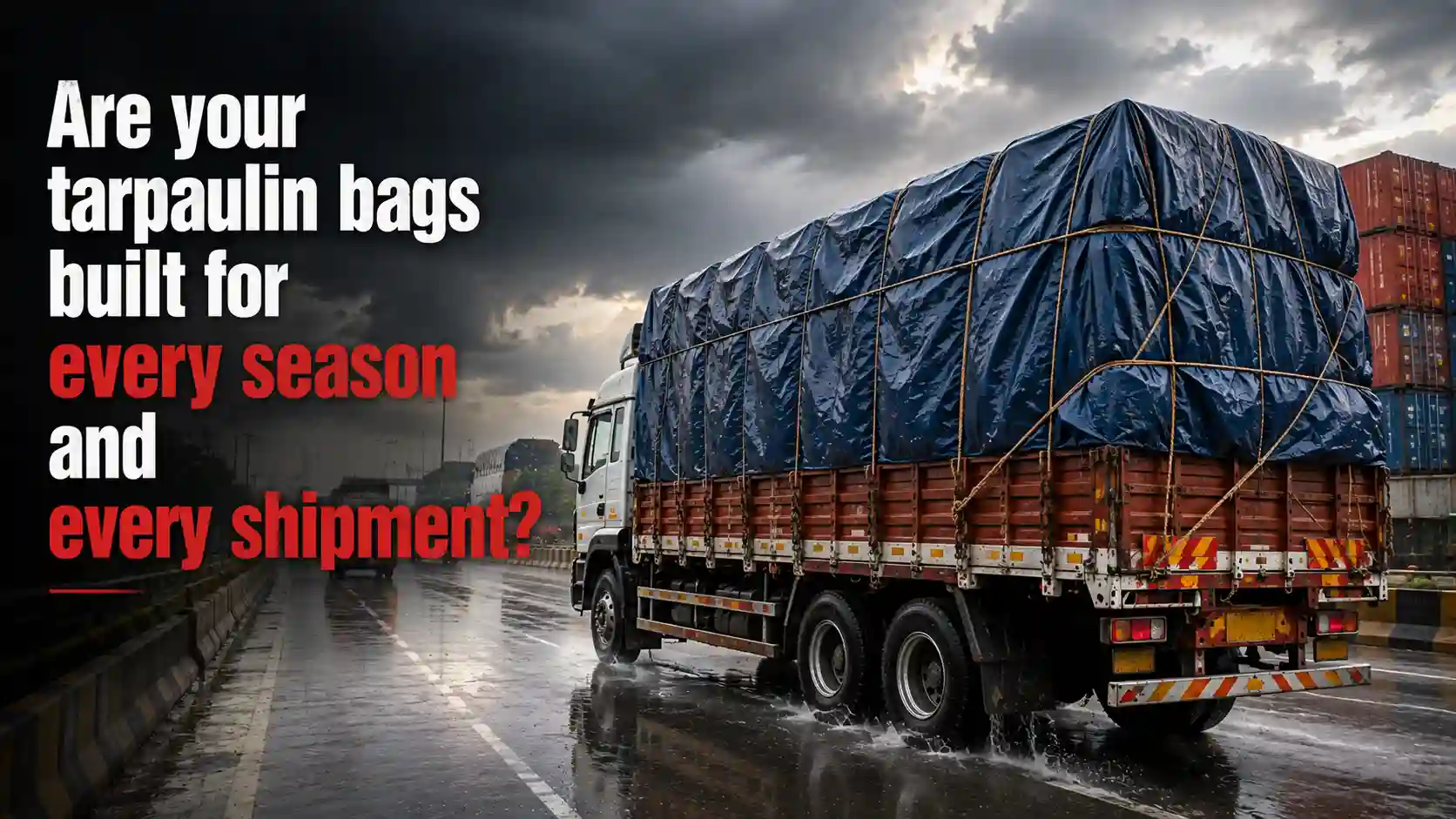
Are your tarpaulin bags built for every season and every shipment?
A tarpaulin bag may begin its journey inside a warehouse, but its real performance is tested once it enters the outside world. It can be filled, lifted, stacked, transported, unloaded, stored, and handled again while facing changing temperatures, moisture, dust, and sunlight. For businesses moving goods through demanding environments, every stage can place different demands on the packaging.
Ashoka Poly Laminators understands that tarpaulin-based packaging needs to be considered according to its actual working conditions. When businesses evaluate Tarpaulin Bags Manufacturers, they should look beyond appearance and ask a more practical question: can the bag continue performing when the environment and handling conditions change?
That question provides a better starting point for evaluating suitability, construction, and expected performance.
The real test begins after filling
A bag can look perfectly acceptable before it is used. The situation changes once it is filled with a substantial load and begins moving through a warehouse or transport network.
During filling and handling, the material experiences pressure and tension. Lifting can place stress on specific areas, while stacking can create additional pressure between individual bags. Repeated movement may also expose the outer surface to friction and rough handling.
This means the construction of the bag has to work as a complete system. Fabric strength, dimensions, stitching, finishing, and the intended load all influence how the product behaves during everyday use.
For Tarpaulin Bags Manufacturers, understanding these practical conditions is essential because a specification that looks suitable on paper may not always be appropriate for the way a customer actually handles the bags.
Weather changes the conditions around the packaging
Outdoor packaging rarely experiences just one type of weather.
A bag may be exposed to strong sunlight during summer and then encounter rain and humidity during the monsoon. In other regions, dust, wind, and fluctuating temperatures can become part of everyday storage and transportation conditions.
The important consideration is therefore not whether a bag can tolerate one short period of exposure, but whether its intended construction is suitable for the environment in which it will be used.
Businesses should explain these conditions when discussing requirements with Tarpaulin Bags Manufacturers. The expected duration of outdoor exposure, frequency of handling, and storage environment can all influence the appropriate product specification.
At Ashoka Poly Laminators, understanding the application helps keep the conversation focused on practical requirements rather than selecting a product simply because it appears heavier or stronger.
One shipment can involve several different types of stress
Consider what happens after a filled bag leaves the production facility.
It may be moved from the filling area to a storage location, loaded onto a vehicle, transported over a long distance, unloaded at a distribution point, and then moved again before reaching its final destination. Each stage can involve different forms of pressure, friction, pulling, and compression.
The journey may also involve temporary outdoor exposure, particularly when loading or unloading takes place during changing weather.
This is why Tarpaulin Bags Manufacturers need to consider the complete handling cycle rather than focusing on one stage of transportation. A product that is suitable for short-distance indoor movement may have different requirements from one expected to withstand frequent outdoor handling.
Ashoka Poly Laminators considers these practical differences when developing Packaging Solutions for agricultural, transportation, construction, and industrial applications.
Storage can be just as important as transportation
A common mistake is to think about packaging only while the product is moving.
In reality, filled bags may spend days or weeks in warehouses, covered storage areas, agricultural locations, construction sites, or distribution facilities. During this period, environmental conditions and stacking practices can influence how the packaging performs.
The storage location also matters. Indoor storage provides a different environment from partially covered or open-air storage. Similarly, occasional handling creates different demands from packaging that is repeatedly moved throughout a facility.
When businesses discuss requirements with Tarpaulin Bags Manufacturers, providing information about expected storage conditions can help ensure that the selected product is appropriate for its complete lifecycle.
Does thicker always mean better?
Thickness is one of the easiest specifications for buyers to compare, but it does not tell the entire story.
A thicker material may not automatically be the most suitable option for every application. The actual performance of a tarpaulin bag also depends on its fabric construction, lamination, finishing, dimensions, stitching, and the conditions under which it will be used.
For example, a bag intended for occasional covered storage may have different requirements from one used repeatedly for outdoor transportation.
Instead of asking only for the thickest available option, businesses should explain the application to Tarpaulin Bags Manufacturers and determine which specifications are appropriate for the expected workload.
This approach can prevent both under-specification and unnecessary material use.
Think about the entire year, not just the next shipment
For businesses with seasonal operations, packaging decisions often need to account for changing conditions throughout the year.
Agricultural businesses may experience periods of intensive movement around harvesting seasons, followed by longer storage periods. Construction businesses may require packaging across changing site conditions, while transport operators may expose their bags to different weather conditions across multiple routes.
A useful purchasing decision therefore considers the complete operating cycle rather than one isolated shipment.
Tarpaulin Bags Manufacturers can provide more meaningful guidance when buyers explain how frequently the bags will be used, where they will be stored, and what environmental conditions they are expected to encounter.
The application should determine the specification
There is no universal specification that makes one tarpaulin bag suitable for every business.
A transporter may prioritise resistance to repeated loading and unloading, while an agricultural user may be more concerned about outdoor exposure and seasonal storage. Construction applications can involve rough surfaces and frequent movement, creating another set of practical considerations.
This makes application knowledge an important part of the purchasing process.
Ashoka Poly Laminators works with customers to understand these differences before discussing the appropriate packaging requirements. For businesses comparing Tarpaulin Bags Manufacturers, this application-based approach can make it easier to identify products suited to actual working conditions rather than relying on generic specifications.
What should buyers discuss before ordering?
A productive conversation with a manufacturer should begin with the product’s intended use. Buyers can provide information about the type of material being packed, approximate load requirements, handling frequency, transportation conditions, storage environment, and expected duration of use.
These details help manufacturers understand the stresses the finished bag is expected to experience.
They also make future repeat orders easier because the requirements are based on a defined application rather than an informal description such as “heavy-duty” or “strong.”
For businesses working with Tarpaulin Bags Manufacturers, clearer specifications can ultimately lead to better purchasing decisions and fewer surprises after delivery.
When seasonal demand becomes a recurring requirement
For companies that purchase packaging around agricultural cycles, construction schedules, or recurring distribution requirements, consistency becomes especially important.
Once a specification has been approved, future orders need to remain aligned with the established requirements. Significant differences between batches can create unnecessary adjustments in handling, storage, or procurement planning.
An established manufacturing process makes recurring requirements easier to manage because the customer and manufacturer already understand the intended application.
Ashoka Poly Laminators supports businesses with repeat manufacturing requirements by maintaining a practical focus on specification, application, and dependable production.
Final thoughts
Tarpaulin bags should be evaluated according to the journey they are expected to complete. Seasonal exposure, loading practices, transportation, storage, and repeated handling can all influence performance, which is why the right specification begins with understanding the real application.
When comparing Tarpaulin Bags Manufacturers, businesses can make better decisions by discussing their complete operating conditions rather than judging products only by appearance or price. Ashoka Poly Laminators brings manufacturing experience to these requirements and develops tarpaulin-based packaging solutions for businesses operating across agriculture, transportation, construction, storage, and industrial environments.
Contact Ashoka Poly Laminators
If your business needs tarpaulin bags for seasonal operations, transportation, storage, or demanding industrial applications, Ashoka Poly Laminators can help you discuss the required specifications and bulk supply requirements.
Phone: +91 7078666249
Email: apl@ashokafoam.com
Contact Ashoka Poly Laminators to discuss your application and request a customised quotation.

Recent Posts
Festive dispatches are growing—can your tarpaulin handle the journey?

Festive sweets need more than a pretty pouch—what keeps them protected?