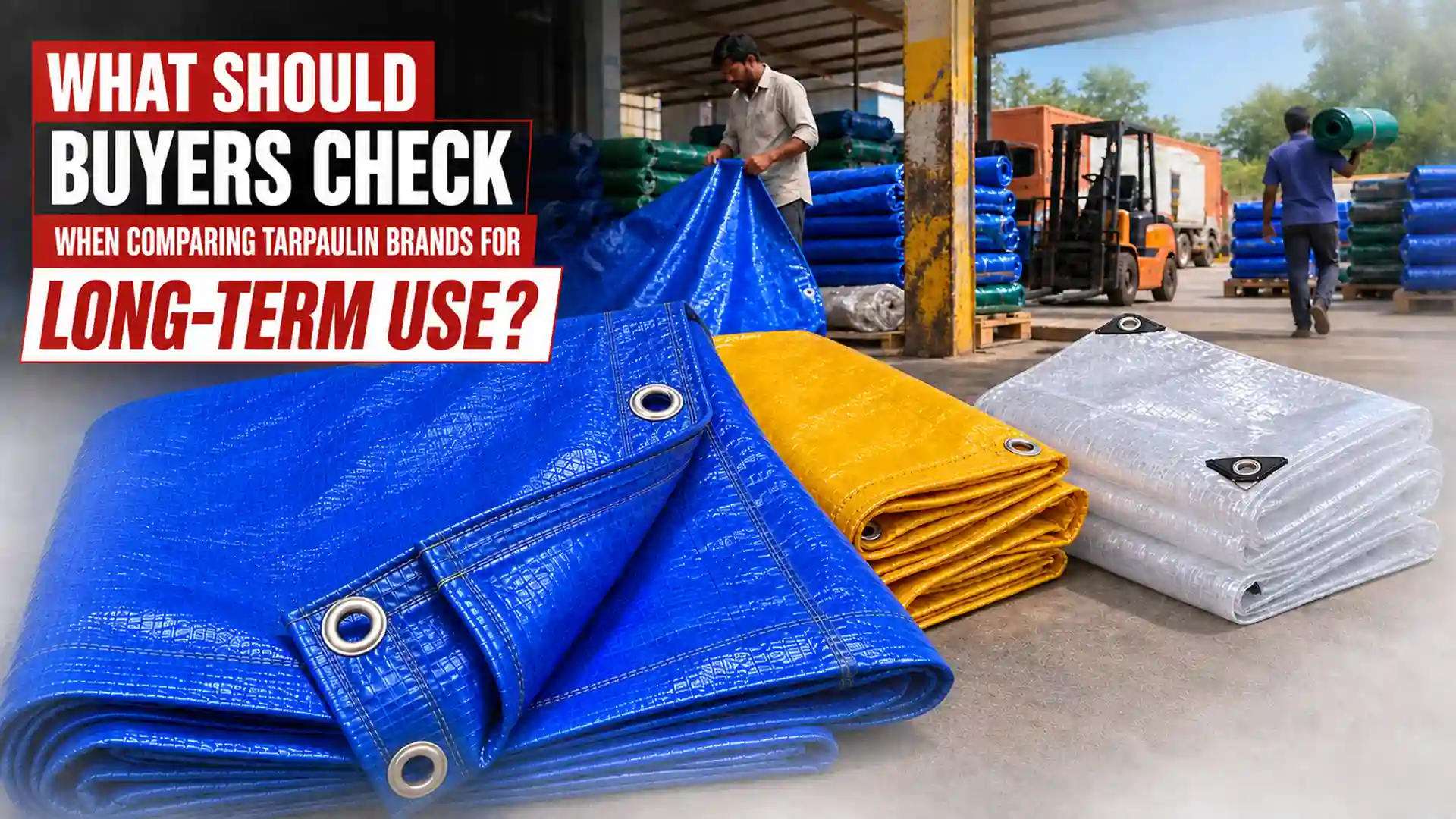
What should buyers check when comparing tarpaulin brands for long-term use?
Choosing outdoor covering material for long-term use requires more thought than comparing prices and colours. A cover may face sunlight, rain, dust, wind, repeated folding, tying, and handling throughout its service period. These conditions can place very different demands on the finished product.
When comparing the Best Tarpaulin Brand in India, buyers should therefore start with the application rather than the marketing description. Ashoka Poly Laminators approaches tarpaulin requirements by considering where the material will be used, how it will be handled, and what it needs to protect. This makes the comparison more practical for agricultural, transport, construction, and storage applications.
Start by defining the actual use
Before comparing manufacturers, identify what the cover will protect and where it will be used.
A sheet covering agricultural material may remain outdoors for weeks, while a truck cover can experience constant movement and repeated securing. Construction applications may involve equipment, building materials, or temporary site protection.
These situations do not create identical requirements.
The first step should therefore be to describe the operating environment, expected exposure, approximate duration of use, and frequency of handling. Once these factors are clear, buyers can compare products that are genuinely suitable for the same purpose.
Look beyond the surface
Two tarpaulins can appear similar while having different constructions.
The underlying fabric, coating, thickness, finishing, and manufacturing specifications all contribute to the behaviour of the finished material. A product description that simply says “heavy duty” does not tell a procurement team enough about what it is actually buying.
When evaluating the Best Tarpaulin Brand in India, ask for relevant technical information instead of relying on promotional terminology.
The important question is not which product sounds strongest. It is whether the construction matches the conditions the cover will face.
Understand GSM correctly
GSM is useful when comparing tarpaulin specifications, but it should not become the only selection criterion.
A heavier material may be appropriate for one application, while another may require a different balance between weight, handling, construction, and intended use. GSM should therefore be considered together with fabric type, coating, dimensions, and environmental exposure.
For example, a cover intended for repeated vehicle use may have different requirements from one placed over stored agricultural material.
A sensible purchasing decision looks at the complete specification rather than selecting the highest number available.
Consider prolonged sunlight exposure
Outdoor covers regularly encounter sunlight, and extended exposure can make UV resistance an important consideration.
Agricultural storage, vehicle covering, construction sites, and outdoor equipment protection can all involve periods when the material remains exposed rather than being moved into covered storage.
Buyers should ask how the product is designed for its expected outdoor environment and how frequently it will be exposed.
Ashoka Poly Laminators considers intended usage when discussing tarpaulin specifications because environmental conditions can influence the material requirements.
This is particularly useful when the buyer expects the same product to be used repeatedly across different seasons.
Water protection involves more than the sheet
Keeping rain away from the protected material is one of the primary reasons for using an outdoor cover.
However, the complete product needs to be considered. Seams, stitching areas, corners, fastening points, folds, and places subjected to repeated pulling can all become important during actual use.
A tarpaulin that performs well as a flat sheet still needs to remain practical when installed, secured, folded, and moved.
Therefore, when comparing the Best Tarpaulin Brand in India, buyers should examine the finished construction rather than judging water resistance from the surface alone.
Examine eyelets and fastening points
Tarpaulin is rarely used without some form of securing.
Ropes, straps, hooks, or other fastening methods may place concentrated pressure around eyelets and corners. These areas can experience repeated pulling, especially when a cover is tightened over a truck, agricultural material, or equipment.
For long-term applications, buyers should understand how the tarpaulin is intended to be secured and how frequently it will be removed and installed.
This information helps determine whether the selected format is appropriate for the handling routine rather than simply suitable when spread out on the ground.
Size can influence practical performance
Correct dimensions matter more than many buyers initially expect.
An undersized cover may need to be stretched excessively, leaving parts of the protected area exposed. An unnecessarily oversized sheet can create loose sections, additional folds, and more material to manage during installation.
The correct size should reflect the object or area being covered and the way the material will be secured.
For businesses with recurring requirements, standardising commonly used dimensions can also simplify purchasing, inventory management, and replacement planning.
Long-term use means different things to different buyers
There is no single definition of “long-term” across every industry.
A farmer may need seasonal outdoor protection. A transport operator may use the same type of cover repeatedly across multiple journeys. A construction company may require protection for equipment or materials throughout a project.
Their usage patterns differ even though all three may describe their requirement as long-term.
This is why a Tarpaulin Manufacturer needs application information before recommending or producing a particular specification. The intended environment helps determine what characteristics deserve the greatest attention.
Consider repeated folding and handling
A tarpaulin may be folded and unfolded many times during its working life.
Truck operators frequently remove covers for loading and reinstall them afterward. Agricultural users may store covers between seasons. Construction teams may move them between different areas of a site.
Repeated handling can place stress on folds, corners, eyelets, and other frequently manipulated areas.
For this reason, buyers should not evaluate a product only by looking at an unused sample. They should also think about the movements the finished cover will experience during normal operation.
Use an application example when comparing products
Consider two businesses buying tarpaulin.
The first needs covers for agricultural storage where the material will remain relatively stationary but exposed to changing weather. The second operates trucks where covers are regularly tied, removed, folded, and transported.
Although both require outdoor protection, their priorities are not identical.
The agricultural buyer may focus heavily on environmental exposure and coverage, while the transport operator may pay greater attention to dimensions, fastening points, handling, and repeated movement.
Double Kissan Tarpaulin should similarly be evaluated according to the actual application rather than assuming that one specification is automatically appropriate for every situation.
Compare specifications before comparing prices
Price is naturally important in bulk purchasing, but it becomes more useful after the required specification has been established.
Two products with different GSM, construction, dimensions, finishing, or intended applications cannot necessarily be compared as equivalent products.
A lower quotation may look attractive until the buyer discovers that the specification does not suit the intended conditions.
A better purchasing sequence is simple: define the application, establish the required characteristics, compare suitable products, and then evaluate the commercial terms.
This gives procurement teams a more meaningful basis for selecting the Best Tarpaulin Brand in India.
Ask the manufacturer practical questions
A useful conversation with the manufacturer should go beyond “What is the price?”
Buyers can explain:
- Where the tarpaulin will be used
- How long it will remain outdoors
- What it needs to cover
- How often it will be folded or moved
- How it will be secured
- Required dimensions and quantity
These details allow the manufacturer to understand the actual job rather than supplying a generic product.
Ashoka Poly Laminators can use application information like this when discussing tarpaulin requirements, helping buyers move toward a specification that reflects real operating conditions.
Final thoughts
Long-term tarpaulin selection is ultimately about matching construction with use. GSM, coating, fabric, dimensions, UV exposure, water protection, fastening points, and handling conditions should be considered together rather than evaluated as isolated features.
The Best Tarpaulin Brand in India for one application may not automatically be the right choice for another. What matters is whether the product’s specification corresponds with the environment, workload, and handling cycle it will face.
Ashoka Poly Laminators takes an application-focused approach to tarpaulin requirements, helping buyers assess the characteristics that matter for their intended use. Whether the requirement involves agriculture, transportation, construction, or storage, a clear specification provides a stronger foundation for purchasing decisions.
Contact Ashoka Poly Laminators
If you are planning a tarpaulin requirement, share your application, required dimensions, quantity, and expected exposure with Ashoka Poly Laminators.
Phone: +91 7078666249
Email: apl@ashokafoam.com

Recent Posts
Festive dispatches are growing—can your tarpaulin handle the journey?

Festive sweets need more than a pretty pouch—what keeps them protected?