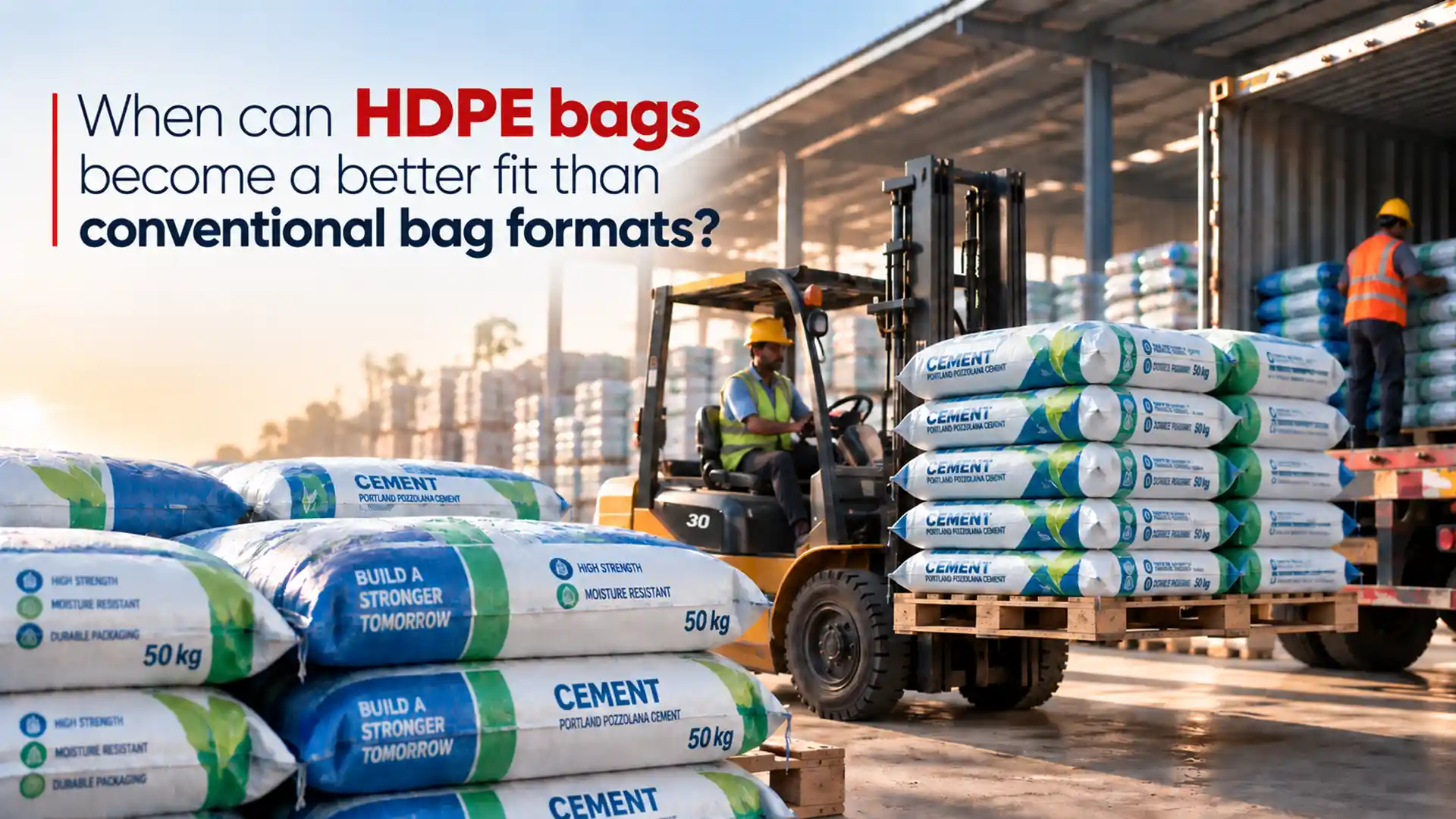
When can HDPE bags become a better fit than conventional bag formats?
Choosing packaging for bulk materials is rarely as simple as selecting the most familiar bag format. The right option depends on what the product weighs, how it is handled, where it is stored, and how far it needs to travel. HDPE bag suppliers can help businesses assess whether an HDPE-based format is better suited to these conditions than a conventional packaging option.
Ashoka Poly Laminators approaches packaging selection around the intended application. For businesses handling agricultural products, industrial materials, chemicals, construction materials, or other bulk goods, an HDPE bag may make sense when the packaging needs to balance strength, handling convenience, and practical storage requirements.
The key is to understand when the material provides a useful advantage rather than assuming it is automatically better.
Start with the material being packed
The product itself should be the first consideration.
A bag used for seeds has different requirements from one used for industrial raw materials. A dry agricultural product may need straightforward containment, while another product may require a more robust construction for repeated movement.
This makes product characteristics important when comparing bag formats. Weight, particle size, density, filling method, and expected handling all influence the specification.
A conversation with HDPE bag suppliers becomes more useful when these details are established before selecting the final format.
When strength becomes a priority
One situation where an HDPE-based bag can be considered is when the packaging needs to withstand demanding handling.
Bulk bags can experience stress during filling, stacking, loading, unloading, and transportation. If the packaging is regularly exposed to these stages, the construction needs to match the expected load and handling conditions.
HDPE offers a strong woven material base for applications where mechanical performance matters. However, the correct specification still depends on the actual weight and handling cycle.
Simply choosing a heavier construction is not always the most efficient answer. The goal is to match the packaging to the job.
When conventional bags create handling difficulties
Familiar packaging formats are not necessarily suitable for every operation.
A business may find that its existing bags are difficult to stack, move, fill, or organise. Problems can become more noticeable as production volumes increase.
An HDPE woven format may provide a more practical alternative when the business needs a bag designed around bulk handling requirements.
For example, if filled bags are routinely moved from a filling line to a warehouse and then loaded onto vehicles, the packaging needs to support that complete sequence rather than only the initial filling stage.
Storage conditions can influence the decision
Packaging does not stop working when a product enters the warehouse.
Bulk goods may remain stored for days or weeks before dispatch. During that time, bags can encounter humidity, dust, handling activity, stacking pressure, and other environmental factors.
The appropriate HDPE construction depends on these conditions.
Ashoka Poly Laminators can consider the intended storage environment when discussing packaging requirements, helping buyers distinguish between short-term indoor storage and applications involving more demanding conditions.
When consistent dimensions improve warehouse operations
Packaging format can also affect how efficiently a warehouse uses its available space.
Consistent bag dimensions can make stacking and stock organisation easier. They can also provide a more predictable arrangement when goods are being prepared for dispatch.
This becomes increasingly relevant for businesses handling large volumes of similar products.
Rather than selecting a bag simply because it is available, buyers can work with HDPE bag suppliers to establish dimensions around the product quantity, storage arrangement, and handling process.
When repeated handling becomes part of the normal cycle
A bulk bag may be handled several times before reaching its final destination.
Imagine a filled bag moving from production to temporary storage, then to a loading area, and finally into a transport vehicle. If the bag is handled again at the receiving facility, its packaging may experience several additional movements.
In such applications, the construction needs to account for the complete handling cycle.
This is where choosing packaging based only on its initial purchase price can be misleading. A bag that performs reliably through normal handling may help avoid the disruption associated with damaged packaging and product spillage.
When moisture protection needs additional consideration
HDPE woven bags can be adapted for applications where the basic woven structure alone may not provide the required level of protection.
Depending on the product and storage environment, laminated construction may be considered to provide an additional barrier against external conditions.
However, this should be application-driven.
A dry product stored indoors for a short period may not require the same construction as material exposed to humid or variable conditions. Ashoka Poly Laminators can assess the intended use before recommending whether additional construction is appropriate.
Different products may need different HDPE specifications
There is no single HDPE bag specification that suits every bulk product.
For instance, a lightweight agricultural material and a dense industrial product can place very different demands on the packaging. The same dimensions may also behave differently depending on the product’s density and filling quantity.
Important variables can include:
- Filled weight
- Bag dimensions
- Fabric construction
- Stitching
- Printing
- Lamination
- Closure requirements
- Storage and transportation conditions
Considering these together produces a more useful specification than selecting the material name alone.
A practical example: agricultural inputs
Consider a business supplying agricultural inputs to distributors.
The product may be packed at a central facility, stored temporarily, and then transported to different locations. The bags need to remain manageable during repeated loading and unloading while keeping the contents contained.
An HDPE woven format can be considered when the operation requires a balance of strength, practical handling, and consistent dimensions.
If the product also needs additional protection from environmental exposure, the packaging construction can be evaluated accordingly.
Another use case: industrial materials
Industrial materials can create another set of requirements.
A dense product may place considerable load on the bottom and seams of a bag. If the filled bags are stacked, moved mechanically, or transported over longer distances, the construction needs to reflect those stresses.
Here, the discussion with HDPE bag suppliers should focus on the complete handling process.
The right question is not simply, “Can this bag hold the product?” It is, “Can this bag perform reliably through filling, storage, movement, and dispatch?”
When standardisation becomes valuable
Businesses that purchase packaging regularly can benefit from establishing clear specifications for recurring applications.
Once the product, bag dimensions, construction, printing, and handling requirements are understood, repeat procurement becomes easier.
This can also help purchasing teams compare quotations more accurately because suppliers are working from the same technical requirements.
Ashoka Poly Laminators can work with businesses to understand recurring packaging needs and develop specifications suited to their particular bulk-handling operations.
When an HDPE bag may not be the right answer
Good packaging selection also means knowing when not to choose a particular format.
An HDPE woven bag may not be suitable simply because strength is required. The product may have specialised barrier needs, unusual dimensions, or handling requirements that call for another packaging structure.
The decision should therefore be based on the product and process rather than on a blanket preference for one material.
This application-first approach helps prevent over-specification and avoids using packaging features that provide little practical value.
What should buyers ask before changing formats?
Before replacing an existing bag, buyers should compare the complete operating requirements.
Ask:
- What is causing the current packaging format to become unsuitable?
- What weight does each bag need to carry?
- How many times will the filled bag be handled?
- Where will the product be stored?
- Does the product require additional protection?
- What bag dimensions work with the existing filling and storage process?
- Will printing or identification requirements change?
- Can the new format support the expected transportation cycle?
These questions make the decision more objective and easier to discuss with a manufacturer.
Why application knowledge matters
The most suitable packaging is rarely selected from the material name alone.
Ashoka Poly Laminators can evaluate factors such as product type, filling weight, dimensions, storage environment, handling method, and transportation requirements when discussing HDPE woven packaging.
That approach allows the packaging to be designed around the real workflow instead of forcing the workflow to adapt to an off-the-shelf format.
For businesses considering a change, this can make the transition more controlled and practical.
Final thoughts
An HDPE bag can become a better fit than a conventional format when the application calls for a combination of strength, practical handling, consistent sizing, and suitable protection.
But the material itself is only the starting point. The final choice should reflect the product, filled weight, storage conditions, handling frequency, transport process, and any additional protection required.
Businesses comparing HDPE bag suppliers should therefore look beyond a basic price or material comparison. A useful supplier should be able to understand the application and help establish a specification that makes sense for the complete handling cycle.
Ashoka Poly Laminators can help businesses evaluate their requirements and discuss an HDPE Woven Packaging format suited to their products and operations.
Discuss your HDPE bag requirement
Share your product type, filling weight, required dimensions, storage conditions, handling method, and order quantity with Ashoka Poly Laminators.
Contact Ashoka Poly Laminators
📞 Phone: +91 7078666249
📧 Email: apl@ashokafoam.com
Request a bulk quotation or discuss the right packaging specification for your application.

Recent Posts
Festive dispatches are growing—can your tarpaulin handle the journey?
Festive sweets need more than a pretty pouch—what keeps them protected?