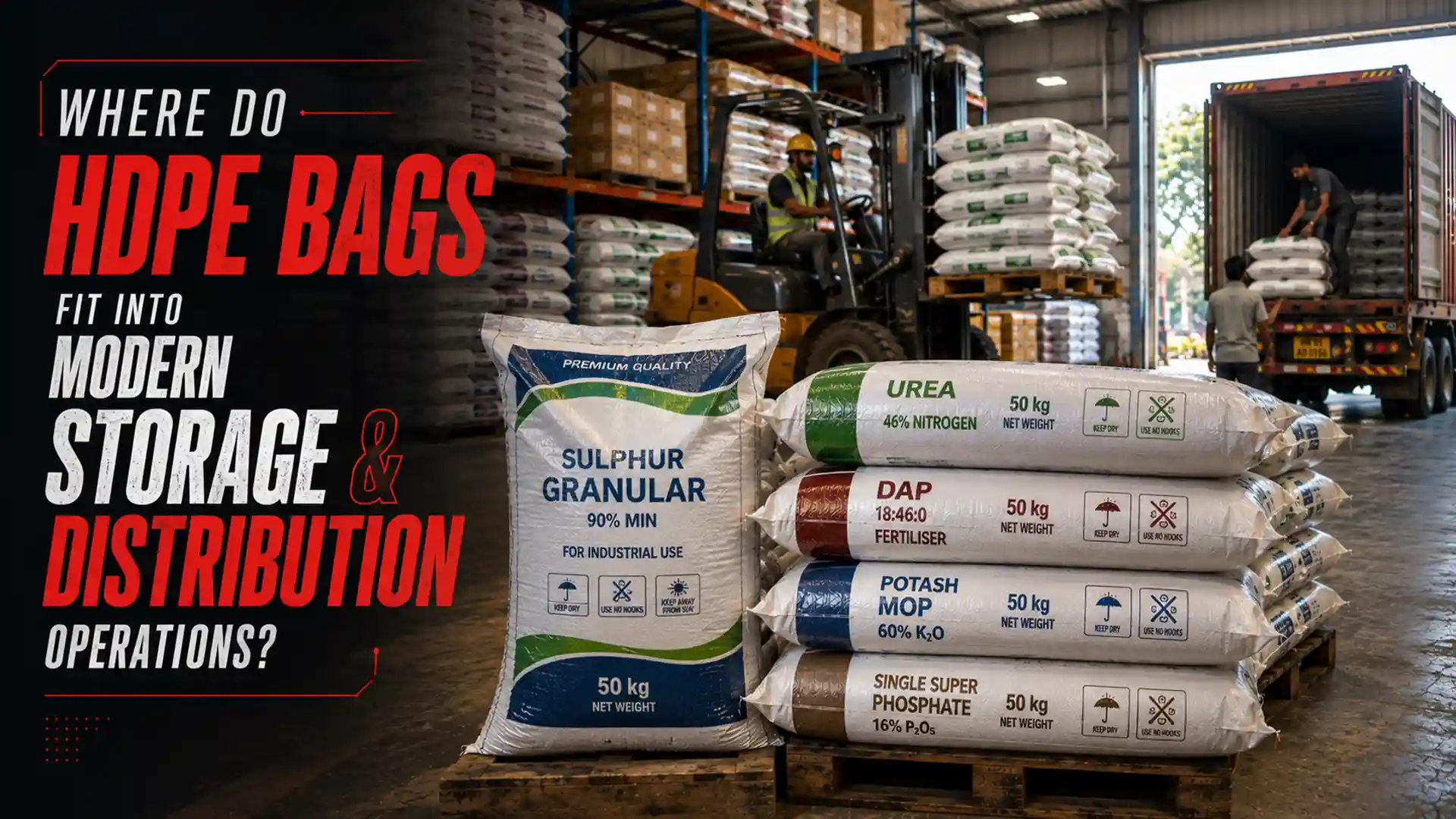
Where do HDPE bags fit into modern storage and distribution operations?
Modern storage and distribution systems depend on packaging that can perform consistently beyond the filling line. Products may pass through production areas, warehouses, loading points, transport vehicles, distributors, and multiple handling stages before reaching their final destination. Packaging therefore needs to suit the complete movement of the product rather than only the moment it is filled.
An HDPE Bag can become an important part of this process when its construction and specifications match the product, weight, handling method, storage environment, and transportation requirements. At Ashoka Poly Laminators, packaging discussions begin with understanding these practical conditions because the right bag should support the way a business actually moves its products.
Packaging begins with the product
Every storage and distribution requirement starts with the material being packed. Grain, seeds, animal feed, fertiliser, industrial raw materials, and other bulk products can behave differently during filling, stacking, and transportation.
Product density, particle size, fill weight, and flow characteristics can influence the appropriate bag format. A specification that works efficiently for one product may not necessarily be suitable for another, even when the required quantities appear similar.
For this reason, businesses should describe their product and intended application before selecting an HDPE Bag. This gives the manufacturer a clearer understanding of what the packaging needs to accommodate.
The filling process sets important requirements
The first operational test happens when the product enters the bag.
Businesses using automated or semi-automated filling systems need packaging that corresponds with their equipment and workflow. Dimensions, opening configuration, filling speed, and handling arrangements can all influence how smoothly the operation runs.
When packaging does not fit the filling process properly, operators may need to make adjustments that slow production or create avoidable interruptions. These problems become more significant when thousands of bags are filled each day.
A suitable HDPE Bag should therefore be considered as part of the filling system rather than as an isolated packaging item.
What changes after the bag is filled?
An empty package and a filled package experience very different conditions.
Once material enters the bag, its weight affects the overall shape and handling characteristics. The filled unit may then be lifted, moved, stacked, loaded, transported, unloaded, and stored again.
This makes construction an important consideration for businesses purchasing packaging in volume. Buyers should explain how filled bags will be handled and whether movement will be manual or mechanical.
Ashoka Poly Laminators considers these practical details when discussing an HDPE Bag requirement, helping buyers connect the product specification with its intended operating environment.
Warehouse organisation depends on consistency
A warehouse becomes easier to manage when packages have predictable dimensions and formats.
Filled bags may be arranged on pallets, placed in stacks, transferred between storage zones, or prepared for dispatch. Consistent packaging can help teams organise these activities more systematically.
The stacking method also matters. Bags positioned underneath other filled units can experience different conditions from packages stored individually.
Before placing a large order, procurement teams should therefore discuss expected storage duration, stacking arrangements, pallet use, and warehouse handling. These factors can influence the suitability of the final HDPE Bag specification.
Storage is part of the distribution journey
Products do not always move directly from manufacturing to the customer.
A bulk material may remain at the producer’s facility before dispatch, move through a regional warehouse, or spend additional time with a distributor. Each stage can introduce another opportunity for handling and repositioning.
This makes storage conditions an important part of packaging selection.
Indoor storage, longer holding periods, frequent movement, and different warehouse arrangements can create different operational requirements. Buyers should provide this information early rather than treating storage as an issue to consider after packaging has been selected.
Transportation introduces another layer of handling
Once products leave the warehouse, packaging faces a different environment.
Loading and unloading can involve lifting and repositioning. During transportation, packages may experience vibration, movement, stacking pressure, and repeated handling at distribution points.
The distance and route can also matter. A local delivery may involve relatively few transfers, while a nationwide distribution network can expose the filled package to several handling stages.
An HDPE Bag intended for such a supply chain should therefore be evaluated according to the complete route. Understanding where the package travels can help buyers and manufacturers establish more relevant specifications.
Packaging can also support identification
Storage and distribution are not only physical processes. Businesses also need to identify products accurately.
Printed information can help distinguish product grades, communicate specifications, display brand information, and support warehouse organisation. This can be especially useful when several products are handled in the same facility.
Printing requirements should therefore be considered alongside physical packaging requirements. Artwork, identification details, and bag dimensions need to work together so that important information remains practical and visible.
Ashoka Poly Laminators can incorporate relevant printing considerations into packaging discussions where identification is an important part of the customer’s workflow.
Different materials create different handling challenges
There is no universal specification for every bulk product.
A coarse agricultural material may behave differently from a fine industrial powder. A dense product can create a different filled-bag weight from a lighter material occupying the same volume. These differences influence how packages are filled, moved, stacked, and transported.
That is why the term HDPE Bag alone does not provide enough information to select the correct product. The packaging specification needs to be connected with the material, quantity, and handling conditions.
For procurement teams, this means a more detailed technical conversation can be more valuable than choosing from a generic catalogue.
Consider the people handling the package
Packaging should work for operators as well as products.
Employees may lift bags from filling areas, arrange them in storage, prepare shipments, load vehicles, or move packages between different locations. If the packaging format does not suit these activities, even a technically adequate bag can become inconvenient in daily operations.
Businesses should therefore explain whether handling is manual, mechanical, or a combination of both.
For recurring requirements, observing how workers actually move filled packages can also reveal useful information that may not appear in a standard purchasing specification.
A practical example from agricultural distribution
Consider an agricultural business supplying bulk material to distributors in several regions.
The product is filled at the production facility and moved into temporary storage. It is then stacked, loaded onto trucks, transported to regional distributors, unloaded, and eventually moved again before reaching the end customer.
The packaging is involved at every stage.
If the bag is selected only according to its fill capacity, the business may overlook warehouse organisation, stacking, transport, and repeated handling. Considering the complete route provides a stronger basis for selecting an HDPE Bag that fits the actual distribution process.
This approach can also help procurement teams standardise packaging for recurring orders.
What should buyers establish before ordering?
A useful packaging discussion should cover the basic operating conditions before production is finalised.
Buyers should communicate the product type, expected fill weight, filling method, required dimensions, storage conditions, stacking arrangement, transportation route, handling method, order quantity, and printing requirements where applicable.
These details help the manufacturer understand what the packaging needs to accomplish.
For businesses sourcing an HDPE Bag, this preparation can reduce the risk of choosing a specification based only on price or a generic size. It also creates a clearer reference point for future repeat orders.
The right specification can simplify the supply chain
Packaging does not operate separately from storage and distribution. It connects several activities that begin at filling and continue through warehousing, transportation, and delivery.
A suitable HDPE Bag can therefore contribute to a more organised packaging workflow when its specifications are aligned with the product and handling environment.
Ashoka Poly Laminators works with businesses by considering these application requirements before discussing the final packaging specification. The objective is to understand the complete movement of the product rather than focus on one isolated stage.
For businesses with recurring bulk requirements, this application-led approach can also make future procurement discussions more straightforward.
Final thoughts
The role of an HDPE Bag in modern storage and distribution extends beyond simply containing material. The package becomes part of filling operations, warehouse organisation, stacking, transportation, identification, and repeated handling.
The most suitable specification depends on the product being packed, fill weight, filling system, storage conditions, distribution route, and frequency of handling. Buyers who define these factors before ordering can make more informed packaging decisions and avoid selecting a product based solely on appearance or price.
Ashoka Poly Laminators takes a practical approach to packaging requirements, helping businesses consider how their products move through the supply chain. Whether the application involves agricultural materials, Industrial Products, or other bulk goods, understanding the complete journey provides a stronger foundation for packaging selection.
Contact Ashoka Poly Laminators
For bulk packaging requirements, customised specifications, printing needs, or repeat supply, contact Ashoka Poly Laminators.
Phone: +91 7078666249
Email: apl@ashokafoam.com
Share your product, quantity, and handling requirements to discuss a suitable packaging solution.

Recent Posts
Festive dispatches are growing—can your tarpaulin handle the journey?
Festive sweets need more than a pretty pouch—what keeps them protected?