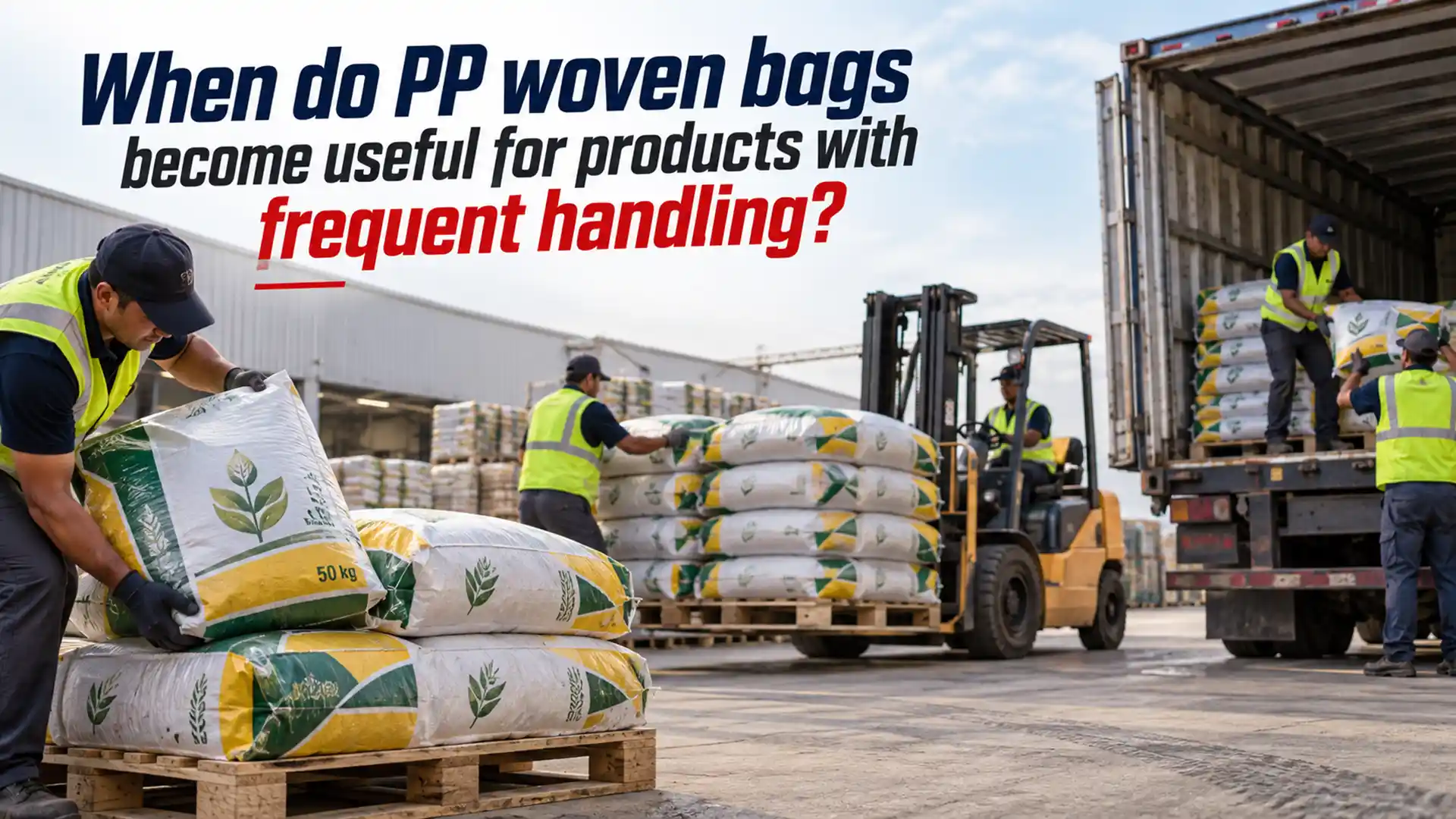
When do PP woven bags become useful for products with frequent handling?
Some products are moved only once after packing. Others may be lifted, stacked, shifted, loaded, unloaded, and stored several times before reaching their final destination. In these situations, packaging needs to cope with more than the product’s weight. PP Woven Bags Supplier selection becomes important when businesses need bags suited to repeated handling across the supply chain.
Ashoka Poly Laminators works with woven packaging requirements where the bag construction needs to match the product, handling method, storage conditions, and transportation cycle. For agricultural products, grains, animal feed, fertiliser, and industrial materials, PP woven bags can be useful when packaging needs a practical combination of strength, manageable weight, and handling convenience.
The real decision is not simply whether PP woven bags are strong. It is whether their construction is appropriate for the way the packed product will actually be handled.
Frequent handling changes what the bag needs to withstand
A packed bag can experience several types of stress during its journey.
It may be lifted manually, moved with equipment, stacked under other bags, pulled into position, or loaded into a vehicle. Each stage can place pressure on different parts of the package.
A bag that performs adequately during filling may not necessarily be suitable for repeated movement.
This is why the complete handling cycle should be considered before the packaging specification is finalised.
Start with the product and filled weight
The first question is what the bag has to carry.
A lightweight agricultural product and a dense industrial material can place very different demands on packaging even when both are packed in bags of similar dimensions.
Filled weight helps determine the required construction, dimensions, stitching, and overall handling characteristics.
When discussing requirements with a PP Woven Bags Supplier, buyers should provide the actual filled weight rather than relying only on a general description such as “bulk packaging.”
Why woven construction can suit repeated movement
PP woven fabric is made by interlacing polypropylene tapes to form a flexible yet strong material structure.
This construction makes woven bags suitable for many bulk applications where the package needs to withstand normal handling without becoming excessively rigid.
The appropriate fabric specification still depends on the application. There is no single construction that should be used for every product.
For businesses that regularly move filled bags between production, storage, and dispatch areas, the fabric needs to be selected around the actual workload.
Stitching becomes important when bags are moved often
Repeated handling places attention on the seams as well as the fabric.
When a filled bag is lifted or shifted, forces can be transferred through stitched areas. If the construction does not match the expected load and handling method, the seam may become a weak point.
This is why bag construction should be evaluated as a complete system.
Ashoka Poly Laminators can consider the required dimensions, filled weight, handling conditions, and construction requirements when discussing PP woven packaging for regular movement.
Handling method can change the specification
Not every warehouse handles bags in the same way.
One operation may depend largely on manual handling. Another may use conveyors, pallet movement, lifting equipment, or other mechanical systems.
The packaging needs to be compatible with the method used.
For example, a bag frequently lifted or transferred mechanically may need a different design consideration from one that remains stationary after filling.
Providing this information to the manufacturer can help avoid selecting packaging based on assumptions.
Repeated stacking adds another requirement
Handling and storage often overlap.
Filled bags may be stacked for several days before dispatch. Bags placed lower in a stack can experience pressure from the weight above them, while movement during stacking and unstacking adds further stress.
The packaging therefore needs to work both as a container and as part of the storage arrangement.
Dimensions also matter. Bags that are consistently sized can make stacking more predictable and help warehouses organise bulk products more efficiently.
When product spillage becomes a concern
A damaged bag can create problems beyond the cost of replacing packaging.
If the contents spill during movement, the business may lose product, require additional cleaning, and need to repack the remaining material.
For high-volume operations, even occasional failures can become costly when repeated across many shipments.
A properly specified woven bag can help reduce avoidable failures by matching the construction to the actual handling cycle.
Does every frequently handled product need the same bag?
No.
The frequency of handling is only one part of the decision.
A product’s weight, density, shape, filling process, storage duration, transport method, and environmental exposure can all influence the appropriate specification.
Two products may both be handled five times before dispatch but still require different packaging because their physical characteristics are different.
This is why PP Woven Bags Supplier discussions should focus on application details rather than simply selecting a standard bag for every product.
Consider protection requirements separately
Strength is not the only consideration when a product is moved repeatedly.
Some products may also require protection from dust, humidity, or external conditions during storage and transport. Depending on the application, laminated woven construction may be considered where additional surface protection is useful.
It should not be assumed that every PP Woven Bag needs lamination.
The product and its environment should determine whether an additional layer provides a practical benefit.
A practical example: animal feed distribution
Consider animal feed packed at a manufacturing facility.
After filling, the bags may be moved to a warehouse, stacked until an order is ready, loaded onto a truck, unloaded at a distributor, and moved again before reaching the end user.
The bag is therefore exposed to several handling stages.
In this type of operation, packaging should be selected around the complete journey rather than only around the filling process. Suitable dimensions, fabric construction, stitching, and handling compatibility can all contribute to more dependable movement.
Another example: agricultural products
Agricultural products can also pass through several storage and transportation stages.
A distributor may receive bags from a processing facility, store them temporarily, and later move them to different customers. Seasonal demand can make storage periods longer than originally expected.
For these applications, consistent bag construction can help create a predictable packaging process across repeated orders.
Ashoka Poly Laminators can discuss such requirements based on product quantity, handling conditions, and intended storage and transport arrangements.
When standardisation can make repeated handling easier
Frequent handling often means frequent packaging purchases.
If every batch uses different dimensions or construction, warehouse and production teams may have to adapt their processes repeatedly.
A defined specification for each product can simplify repeat procurement and make handling more consistent.
Standardisation does not mean using one bag for everything. It means establishing a suitable format for each recurring application and maintaining it unless the product or process changes.
What should buyers tell their supplier?
A manufacturer can make better recommendations when the packaging brief includes practical operating details.
Before placing an order, buyers should consider:
- Product type
- Filled weight
- Required bag dimensions
- Filling method
- Number of handling stages
- Manual or mechanical movement
- Stacking arrangement
- Storage duration
- Transportation conditions
- Printing or identification requirements
- Whether additional protection is required
These details help connect the bag specification with the real workload.
Why manufacturing input matters
Choosing packaging solely from a basic catalogue description can leave important application details unanswered.
A manufacturer familiar with woven packaging can help evaluate how fabric construction, stitching, dimensions, printing, and optional lamination relate to the intended use.
At Ashoka Poly Laminators, packaging discussions can begin with the product and its handling cycle. This allows the specification to be developed around the actual conditions the bag is expected to face.
For businesses dealing with repeated movement, that application-focused approach can be more useful than simply selecting the lowest-cost available format.
Final thoughts
PP woven bags become particularly useful when products need to move through several handling stages and the packaging must remain practical throughout the process.
The right specification depends on more than the number of times a bag is moved. Filled weight, fabric construction, stitching, dimensions, stacking, storage, transport, and environmental conditions all contribute to the final choice.
Businesses comparing a PP Woven Bags Supplier should therefore explain the complete handling journey before selecting their packaging.
Ashoka Poly Laminators can help businesses discuss woven bag requirements around their products, handling methods, and bulk packaging needs.
Need PP woven bags for frequent handling?
Share your product type, filled weight, bag dimensions, handling method, storage conditions, and expected order quantity with Ashoka Poly Laminators.
Contact Ashoka Poly Laminators
📞 Phone: +91 7078666249
📧 Email: apl@ashokafoam.com
Request a bulk quotation or discuss a PP woven bag specification suited to your handling process.

Recent Posts
Your goods face every season—will your tarpaulin be ready

Festive products look better when the right bag does its job