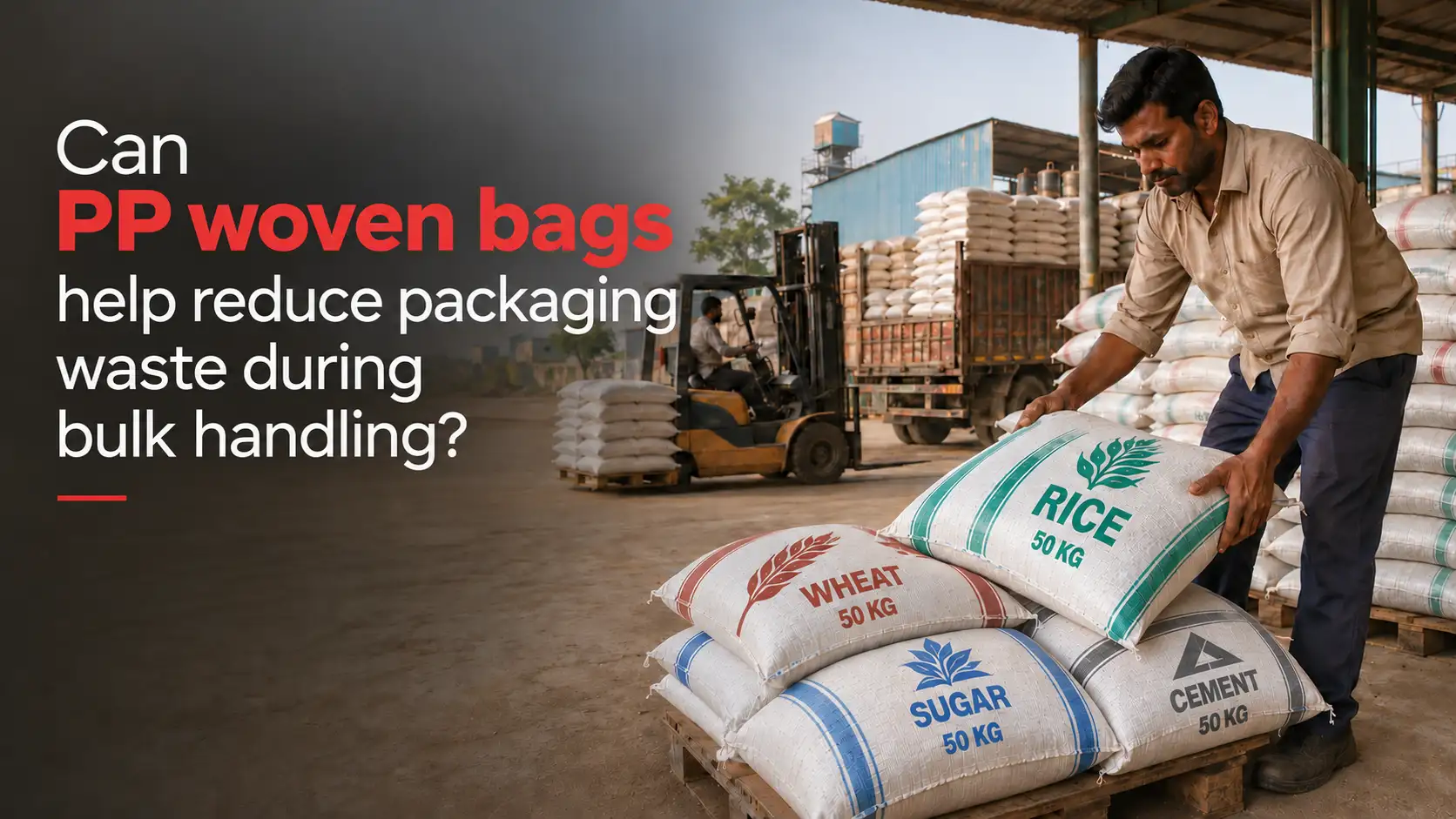
Can PP woven bags help reduce packaging waste during bulk handling?
Bulk handling can create packaging waste in ways that are easy to overlook. Bags may tear during loading, become damaged during movement, or be discarded after a single handling cycle. PP Woven Bags Supplier selection therefore involves more than comparing bag prices. Construction, dimensions, stitching, filling weight, and handling conditions can all influence how much packaging is lost during operations.
Ashoka Poly Laminators works with woven packaging requirements where the bag has to withstand practical handling conditions while remaining suitable for the material being packed. When the right specification is chosen, a woven bag can help reduce avoidable packaging loss and make bulk movement more organised.
The important question is not whether woven bags eliminate waste completely. It is whether better packaging design can prevent unnecessary damage and material use throughout the handling cycle.
Where does packaging waste come from during bulk handling?
Packaging waste does not always begin when a bag reaches the end of its useful life.
Some losses happen earlier. A bag may be damaged while being filled, dragged across a rough surface, stacked incorrectly, lifted with unsuitable equipment, or exposed to conditions outside its intended application.
For bulk products such as grains, animal feed, fertiliser, seeds, and industrial materials, these small incidents can become significant when hundreds or thousands of bags are handled regularly.
Reducing waste therefore starts with understanding how the bag is actually used.
The right bag weight can make a difference
Using more material does not automatically make packaging better.
A bag needs enough strength for its intended load and handling conditions, but unnecessary material can increase packaging consumption without providing a useful benefit.
The specification should take factors such as filled weight, product characteristics, lifting method, stacking, and transport conditions into account.
This is one reason discussions with a PP Woven Bags Supplier should focus on application requirements rather than selecting a bag solely by appearance or initial purchase price.
Bag dimensions should match the product
Poorly matched dimensions can also create avoidable problems.
If a bag is considerably larger than necessary, the unused space may affect stacking and handling. If it is too small, filling can become difficult and the package may experience additional stress.
A suitable size helps create a more controlled package around the actual quantity being handled.
For a business shipping several grades or quantities of the same material, establishing appropriate sizes for each application can also make warehouse operations more consistent.
Strong construction can prevent avoidable losses
A bag that fails during normal handling creates more than a damaged package.
It can lead to product spillage, cleaning work, product loss, repacking, and disposal of the damaged bag. In some industries, the spilled material may also become difficult to recover.
Woven construction provides the base strength required for many bulk packaging applications, but the complete bag still needs to be considered. Fabric specification, stitching, seams, and finishing can all influence performance.
Ashoka Poly Laminators considers these practical construction factors when developing woven packaging for different bulk-handling requirements.
Stitching is part of the waste-reduction equation
The fabric often receives most of the attention, but the seams also deserve consideration.
During lifting and movement, stress can be transferred through stitched areas. If the construction is not appropriate for the load or handling method, failure can occur at the seam even when the fabric itself remains intact.
This is particularly important for bags that are repeatedly moved between filling, storage, loading, and transportation stages.
A useful packaging specification should therefore consider the complete construction rather than treating fabric strength as the only performance measure.
Repeated handling changes the packaging requirement
A bag may experience several handling stages before its contents reach the final user.
For example, a filled bag could move from the production line to a warehouse, from the warehouse to a loading area, and then into a truck. Each transfer places demands on the packaging.
If bags are likely to be handled repeatedly, their construction should reflect that reality.
A PP Woven Bags Supplier can provide more useful guidance when the buyer explains whether bags are manually handled, mechanically lifted, stacked, or exposed to repeated movement.
Less spillage also means less waste
Packaging waste is not limited to the bag itself.
When a damaged bag releases its contents, the material inside can also become part of the loss. This is particularly important for valuable agricultural and industrial products.
A properly specified bag helps keep the contents contained during normal handling. The benefit is therefore twofold: less damaged packaging and less product loss caused by packaging failure.
This is why packaging performance should be evaluated as part of the overall material-handling process.
Can laminated construction help in specific applications?
Some bulk products require additional protection beyond the basic woven structure.
Depending on the application, a laminated surface can provide additional functional properties and may help the package suit products that require greater resistance to external conditions.
However, lamination should not be added simply because it sounds like a stronger option. The requirement should come from the product, storage environment, and intended use.
For businesses handling products where moisture or external exposure is a concern, Ashoka Poly Laminators can evaluate whether a suitable laminated woven construction is appropriate.
Printing can reduce operational mix-ups
Waste can also result from poor identification.
When different products or grades are packed in similar-looking bags, mistakes during storage or dispatch can lead to unnecessary handling, repacking, or rejected shipments.
Printed woven bags can help distinguish product information, grades, brands, and handling details more clearly.
This is not simply a branding advantage. Clear identification can support smoother warehouse movement and reduce errors that create additional packaging work.
Standardisation can help regular bulk operations
Businesses handling large volumes often benefit from consistent packaging specifications.
When bag dimensions, construction, printing, and filling requirements are standardised for a particular product, production and warehouse teams have a clearer process to follow.
It can also make procurement more predictable.
A packaging specification should still be reviewed when the product, fill weight, machinery, or handling method changes. Standardisation works best when it reflects the actual operating conditions rather than becoming a fixed specification that no longer suits the application.
A practical example: agricultural bulk handling
Consider a business packing animal feed in large quantities.
The bags may be filled rapidly, moved into temporary storage, stacked, and later loaded onto transport vehicles. If the packaging is poorly matched to the fill weight or handling process, failures can result in spilled feed and discarded bags.
A correctly specified woven bag can support the complete sequence from filling to dispatch.
In this case, waste reduction does not come from using the thinnest possible bag. It comes from using an appropriate construction that avoids unnecessary failures while using material efficiently.
What should buyers discuss with a supplier?
Before placing a bulk order, buyers should provide more than the required quantity of bags.
Useful information includes:
- Product being packed
- Filled weight per bag
- Bag dimensions
- Storage conditions
- Stacking method
- Manual or mechanical handling
- Expected transport conditions
- Printing requirements
- Whether lamination is required
- Expected order volume
This information allows the packaging specification to be connected to the real handling process.
Why the supplier’s manufacturing understanding matters
Packaging waste can be difficult to reduce when bags are selected only through catalogue specifications.
The supplier needs to understand what happens to the bag after it leaves the production line. Filling, stacking, movement, storage, and loading can all affect the appropriate construction.
At Ashoka Poly Laminators, conversations around woven packaging can be based on these application requirements rather than treating every bulk product in the same way.
For repeat buyers, this approach can also help refine specifications over time based on actual handling experience.
Final thoughts
PP Woven Bags Supplier selection can influence how much packaging waste occurs during bulk handling. The right bag does not simply need to carry the required weight. It needs to suit the product, filling process, handling method, storage conditions, and transport cycle.
A well-matched construction can help reduce avoidable tears, product spillage, repacking, and premature disposal. At the same time, appropriate sizing and material selection can prevent unnecessary packaging consumption.
For businesses moving bulk goods regularly, the most useful question is therefore not “Which bag costs less?” but “Which specification performs efficiently throughout the handling cycle?”
Ashoka Poly Laminators can help businesses evaluate Woven Packaging requirements based on product weight, dimensions, handling conditions, and intended use.
Planning a bulk packaging requirement?
Share your product, filling weight, required bag dimensions, handling method, and expected quantity with Ashoka Poly Laminators to discuss a suitable woven packaging specification.
Contact Ashoka Poly Laminators
📞 Phone: +91 7078666249
📧 Email: apl@ashokafoam.com
Request a bulk quotation or discuss your PP woven bag requirements today.

Recent Posts
Festive dispatches are growing—can your tarpaulin handle the journey?
Festive sweets need more than a pretty pouch—what keeps them protected?