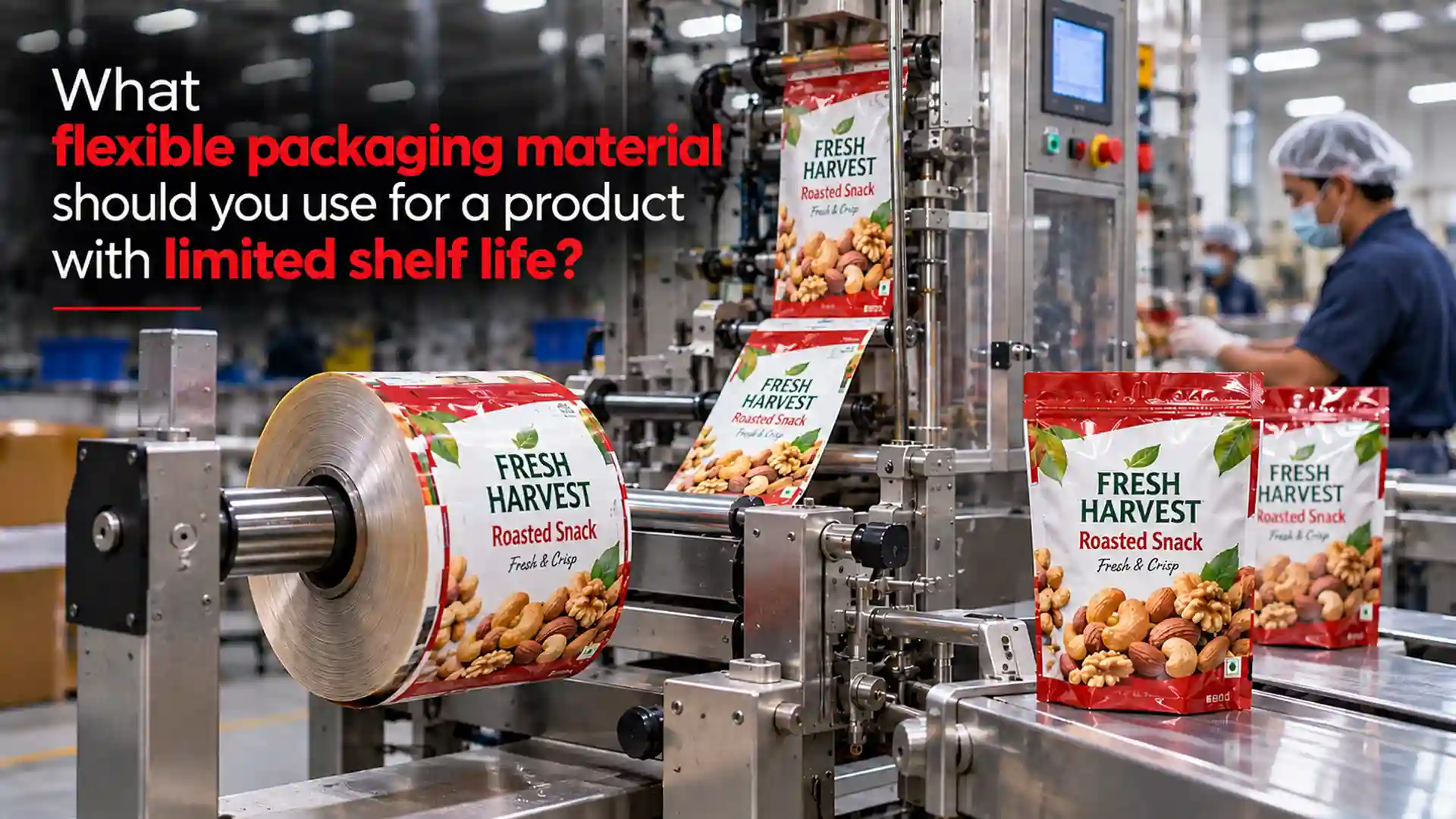
What flexible packaging material should you use for a product with limited shelf life?
When a product has a limited shelf life, choosing the right pack becomes an important part of protecting its quality. Moisture, oxygen, light, heat and storage conditions can all affect how long a product remains usable. Ashoka Poly Laminators helps buyers look at these practical factors when evaluating Flexible Packaging Materials for products that need protection during storage and distribution.
The right choice is not always the thickest or most expensive option. It depends on what is causing the product to lose quality and how long the product needs to remain fresh, dry or stable. Understanding that problem first can make the buying decision much easier.
First identify what is shortening the shelf life
Before selecting a packaging structure, think about why the product has a limited shelf life.
A product may absorb moisture from the surrounding environment. Another may lose freshness because of oxygen exposure. Some products can also be affected by light, temperature changes or repeated handling during transportation.
These problems require different approaches. Instead of asking for a general “high-quality” pack, explain what happens to the product when its quality starts declining.
This gives Ashoka Poly Laminators a clearer understanding of the packaging requirement and helps you discuss Flexible Packaging Materials based on the actual product rather than choosing a material only because it is commonly used.
When moisture is the main concern
Moisture can quickly affect products that need to remain dry.
Powders, snacks, grains and similar products may lose their desired texture or quality when they absorb moisture. In some cases, moisture can also affect flow, appearance and usability.
If moisture is your main concern, discuss the expected storage environment along with the product. A product stored in a humid area may face different conditions from one kept in a controlled warehouse.
When comparing Flexible Packaging Materials, consider how much moisture protection your product actually needs rather than selecting packaging only according to price.
When oxygen can affect the product
Oxygen exposure can be another important shelf-life factor.
Some products can lose freshness, aroma, colour or other qualities when exposed to air for an extended period. If this is happening with your product, the packaging structure should be considered as part of your overall shelf-life plan.
Tell your packaging partner what changes you observe after exposure to air. This information is more useful than simply asking for a thicker pouch.
APL Packaging Materials can be considered when you are reviewing packaging options according to the product’s protection requirements.
When light exposure is a concern
Light can also affect certain products during storage and distribution.
If your product is sensitive to light, consider how it will be stored and transported. It may spend time in warehouses, delivery vehicles, retail areas or other locations where exposure is difficult to control.
The pack still needs to look attractive, but appearance should not come at the expense of product protection.
When reviewing Flexible Packaging Materials, think about both the presentation of the pouch and the conditions the product will experience throughout its journey.
Match the packaging with the expected shelf life
A product designed to remain usable for a few weeks may have different requirements from one expected to remain stable for several months.
Consider the complete period between packing and final use. Do not look only at the time the product spends in your own warehouse.
The product may travel to distributors, remain in storage and then spend additional time with retailers or customers. Delays can sometimes extend the period during which the packaging needs to protect the contents.
Ashoka Poly Laminators can discuss packaging requirements around the expected storage and distribution period so that the chosen format matches the actual use case.
Consider how the product will be filled and sealed
Packaging performance is not only about the material itself. The filling and sealing process also matters.
A suitable structure needs to work with the way your product is packed. Manual and automatic filling processes may have different practical requirements, while sealing quality can affect the protection provided by the finished pack.
Think about the pouch size, filling quantity, sealing area and packaging equipment before placing an order.
This is another reason to discuss Flexible Packaging Materials together with the complete packaging process rather than selecting them separately.
Do not judge packaging only by thickness
A common assumption is that thicker packaging will automatically provide better protection.
Thickness can be relevant, but it is not the only factor. The overall material structure, required barrier properties, sealing and intended application all contribute to how well the finished package performs.
For example, adding more material may not solve the actual problem if the main concern is related to sealing or an unsuitable packaging structure.
APL Flexible Packaging can be considered from the perspective of the product’s actual needs rather than simply choosing the heaviest available option.
Think about storage and transportation
Your product may face several different conditions before reaching the end customer.
Consider humidity, temperature, handling, stacking and transportation time. A pouch that performs well in one environment may need different considerations when the product is transported over longer distances or stored for extended periods.
Make a simple list of the conditions your product normally experiences. Include the expected storage duration and any known problems with your current packaging.
This information can help you have a more useful conversation about Flexible Packaging Materials and avoid choosing a format based only on what looks suitable at first.
Ask these questions before placing an order
You do not need to be a packaging expert to make a well-informed decision. Start by answering a few basic questions:
- What causes the product to lose quality?
- Is moisture a concern?
- Does oxygen affect freshness?
- Can light damage the product?
- How long does the product need to remain usable?
- How will it be filled?
- How will the pouch be sealed?
- Where will the product be stored?
- How long will transportation take?
Having these answers ready can make discussions much clearer.
APL Packaging Products can also be considered when your business needs packaging formats for different products, pack sizes or applications.
Why Ashoka Poly Laminators can be considered
Choosing packaging for a short-shelf-life product should begin with the product itself.
Ashoka Poly Laminators can help businesses discuss their requirements around product protection, filling, sealing, storage and transportation. This allows the packaging decision to focus on a practical problem rather than simply selecting a material based on appearance or cost.
For buyers comparing Flexible Packaging Materials, it is useful to explain the shelf-life challenge clearly. If your existing packaging is not providing the expected protection, describe what is happening and when the problem occurs.
That information can help make the next packaging discussion much more productive.
Choose packaging around the actual product
There is no single packaging option that automatically works for every product with a limited shelf life.
The right choice depends on what is affecting the product, how long it needs to remain usable and what conditions it will experience after packing. Moisture, oxygen, light, sealing and storage can all play a role.
Before placing a packaging order, focus on the actual problem first. Then discuss the packaging structure, pouch format and other requirements around that problem.
Ashoka Poly Laminators can help you evaluate your packaging requirement with these factors in mind.
For packaging discussions and bulk requirements:
Phone: +91 7078666249
Email: apl@ashokafoam.com

Recent Posts
Can HDPE bags handle the everyday demands that ordinary bags cannot?
What PP woven bag options suit different product weights and filling needs?