
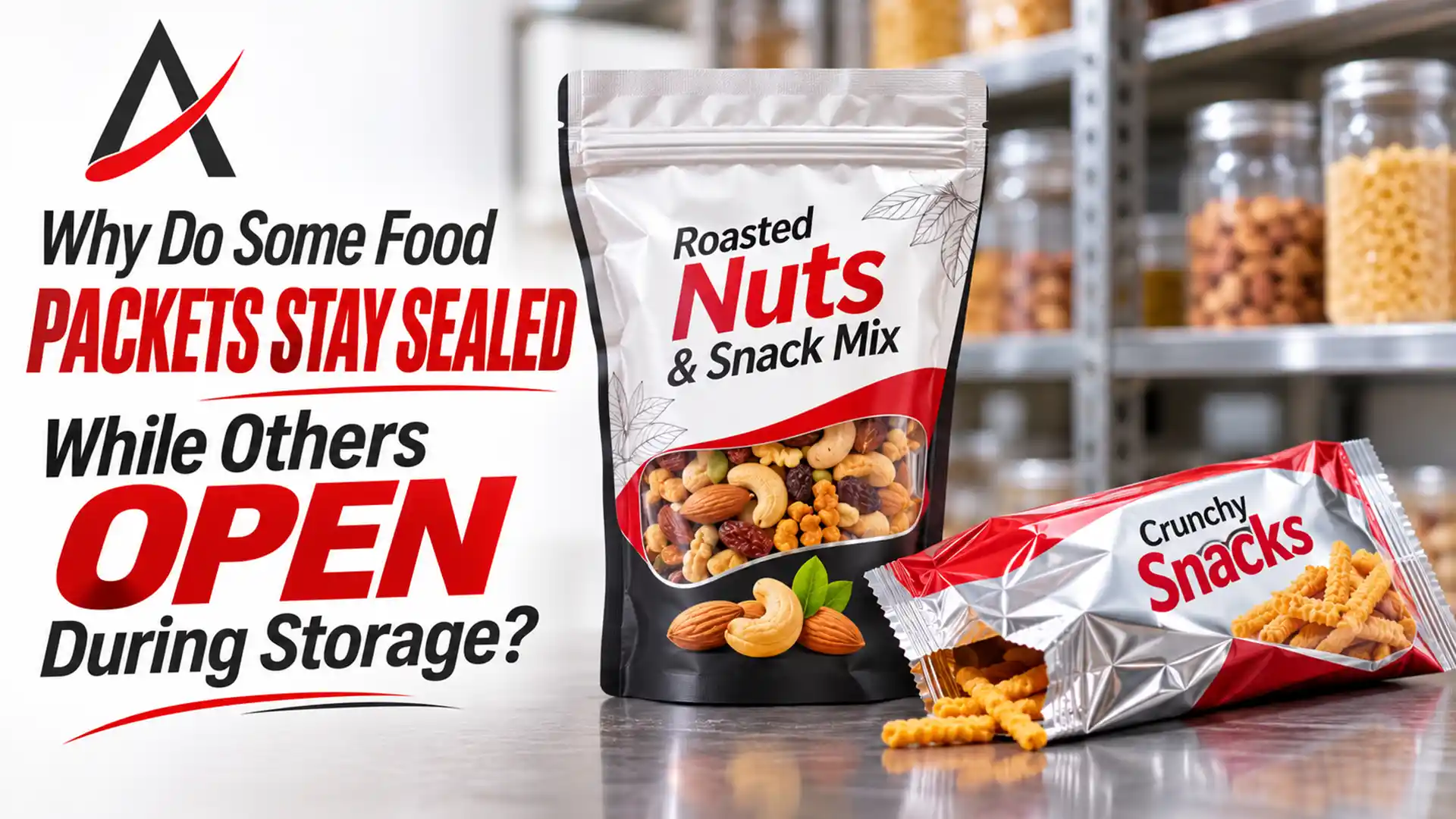
Why do some food packets stay sealed while others open during storage?
Have you ever opened a carton of packaged food and found that some packets are perfectly sealed while others have started opening at the edges? This small problem can lead to product leakage, moisture exposure, damaged goods and customer complaints. But why does it happen, even when all the packets are packed on the same production line?
The reason often lies in the combination of packaging material, sealing conditions and product handling. A packet must remain closed during filling, storage, transportation and retail display. Choosing the right laminated packaging manufacturer in India is therefore important for food businesses that want packaging designed around their products and packing requirements.
Ashoka Poly Laminators works with flexible packaging applications where material structure, sealing performance and product requirements need to be considered together.
What makes a food packet stay properly sealed?
A food packet stays closed when its sealing layers bond correctly. In many flexible packaging formats, heat and pressure are used to join the inner surfaces of the packaging material.
However, simply applying heat does not guarantee a strong seal. The packaging material and machine settings must be compatible with each other.
Three factors play an important role:
- Temperature: The sealing area needs the correct amount of heat to form a proper bond.
- Pressure: Consistent pressure helps the sealing surfaces join evenly.
- Sealing time: The material needs sufficient contact time to develop a reliable seal.
If these conditions are not properly adjusted, the packet may look closed immediately after packing but open later. This is why checking the seal only at the production stage may not be enough.
Why do food packets open after a few days?
A packet can appear perfectly normal when it leaves the factory but develop problems during storage. Several factors can contribute to this.
1. Incorrect sealing temperature
If the temperature is too low, the packaging layers may not bond properly. Excessive heat can also damage or distort the material, weakening the sealing area.
The correct temperature depends on the laminate structure and the sealing machine.
2. Food particles trapped in the sealing area
Small food particles can interfere with the sealing process. Powder, crumbs or oil trapped between the sealing surfaces may prevent them from joining properly.
This can happen when packing spices, snacks, flour and other powdered or granular food products.
3. Uneven sealing pressure
If the sealing machine does not apply consistent pressure, some portions of the packet may seal properly while others remain weak. These weak areas can gradually open during handling or transportation.
4. Pressure during storage and transportation
Food packets are often stacked inside cartons and transported over long distances. Continuous pressure, movement and rough handling can put stress on the sealing edges.
If the original seal is already weak, this additional stress may cause the packet to open.
Can packaging material affect how well a packet seals?
Yes. The material structure has a direct influence on sealing performance.
Laminated packaging is made by combining different layers to achieve properties such as strength, printability, barrier protection and heat sealability. Each layer serves a particular purpose, and the complete structure must suit the product being packed.
For example, snacks may need packaging that helps protect their crisp texture. Spices may require suitable protection against moisture and aroma loss. Products containing oil or fine particles may need special attention to the sealing area.
This is why businesses should not assume that one packaging structure will work for every food product.
An experienced laminated packaging manufacturer in India can help businesses understand how different laminate structures relate to their product requirements. The final material should be selected according to the food type, expected storage conditions, filling process and intended shelf life.
Ashoka Poly Laminators manufactures laminated pouches for different packaging applications, with the intended use guiding the material requirements.
What problems can a weak seal create for food businesses?
A weak seal may appear to be a small packaging defect, but its impact can extend beyond the packet itself.
Imagine a manufacturer packing thousands of snack packets. If the sealing process is inconsistent, some packets may open before reaching retailers. The result could include product wastage, customer complaints and additional costs for replacement or repacking.
Common problems include:
- Moisture exposure: Outside moisture may affect products that are sensitive to humidity.
- Product leakage: Powders, crumbs or small particles may escape through weak sealing areas.
- Reduced product quality: Exposure to air and moisture can affect the texture or quality of certain foods.
- Retail complaints: Open or damaged packets can create a poor customer experience.
- Production losses: Repeated seal failures may require additional inspection, repacking and process adjustments.
For this reason, businesses should treat sealing performance as an important part of packaging quality rather than considering it only at the final packing stage.
How can manufacturers reduce packet-opening problems?
Preventing seal failure requires attention to both the packaging material and the packing process. A suitable material cannot compensate for every machine-related problem, and correct machine settings cannot make an unsuitable laminate perform properly.
Food manufacturers can follow a few practical steps:
Select packaging according to the product. Consider moisture sensitivity, oil content, texture, filling weight and storage requirements before finalizing the material.
Check the sealing machine settings. Temperature, pressure and sealing time should be adjusted according to the laminate and machine specifications.
Keep sealing surfaces clean. Prevent powders, crumbs and oil from collecting in the area where the packet needs to close.
Test packets after filling. Inspect the sealing edges and use appropriate seal-integrity or leak-testing methods.
Evaluate storage and transportation conditions. Check whether stacking pressure, carton arrangement or rough handling is putting additional stress on the packets.
A sample trial under actual production conditions can help identify potential issues before a large packaging order is finalized.
Why does the packaging manufacturer matter?
Food packaging requirements are not identical across industries. A manufacturer packing snacks may need a different laminate structure from a business packing spices, dry fruits or powdered food products.
A suitable laminated packaging manufacturer in India should understand these differences and discuss the material requirements according to the product and packing process.
Ashoka Poly Laminators works in flexible packaging, including laminated pouches for different applications. Businesses should share practical details such as product type, packet dimensions, filling method, sealing equipment and expected storage conditions when discussing their requirements.
This information helps establish which packaging structure may be appropriate and what should be evaluated during sample testing.
If your food packets are opening during storage or transportation, reviewing the laminate and sealing process together can be a useful starting point.
Frequently asked questions
1. Why do sealed food packets open during storage?
Packets may open because of weak sealing, unsuitable machine settings, food particles trapped in the seal or pressure during stacking and transportation.
2. Does packaging material affect sealing strength?
Yes. The laminate structure influences how the sealing surfaces bond. Material compatibility with the sealing process is essential for reliable results.
3. Can excessive heat damage a food packet?
Yes. Excessive sealing temperature can distort or damage the packaging material. The correct temperature depends on the laminate and equipment.
4. How can food manufacturers check seal quality?
Manufacturers can inspect the sealing area and conduct suitable leak or seal-integrity tests. Testing should reflect actual packing and handling conditions.
5. Are all laminated pouches suitable for food products?
No. Different foods have different requirements. The packaging structure should be selected according to product characteristics, intended storage conditions and applicable food-contact requirements.
A properly sealed packet protects more than the product
Packaging must perform throughout the product’s journey, not just look attractive on a retail shelf. A suitable laminate structure, properly adjusted sealing equipment and regular quality checks can help reduce packet-opening problems.
Ashoka Poly Laminators offers flexible packaging options for businesses exploring application-specific laminated pouches. If you are looking for a laminated packaging manufacturer in India, discuss your product requirements before finalizing the packaging material.
Contact Ashoka Poly Laminators
- Phone: +91 7078666249
- Email: apl@ashokafoam.com

Recent Posts

Why do some packaging bags look attractive but fail during handling?
Why do some food packets stay sealed while others open during storage?