Can BOPP bags make product identification easier across busy warehouses?
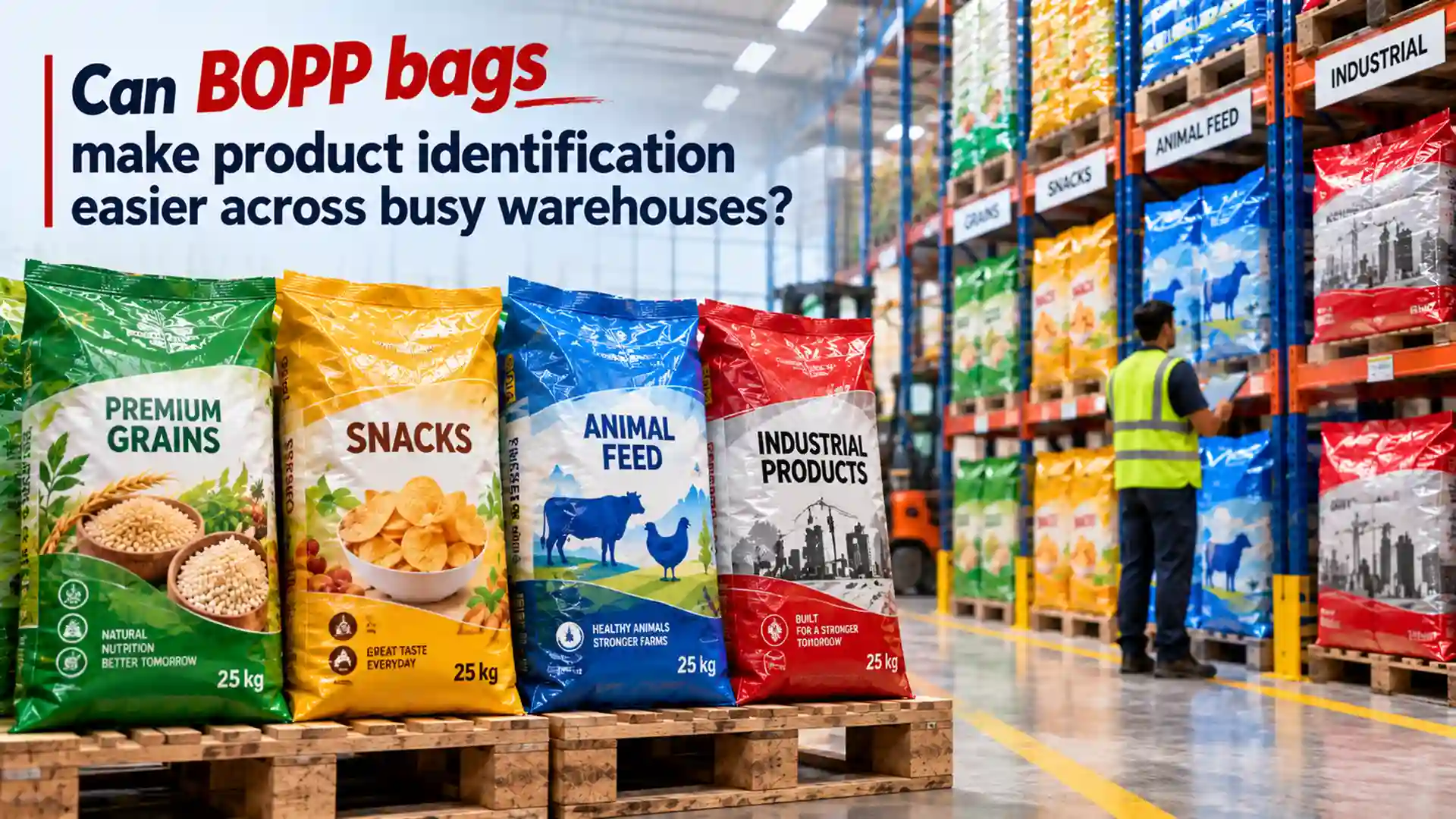
A busy warehouse can contain hundreds or thousands of bags that look similar from a distance. When different products, grades, batches, or pack sizes are stored together, finding the right material can take time. BOPP Bags Manufacturer selection can therefore influence more than the physical strength of packaging. The print quality, information layout, bag design, and visibility of key details can also support faster product identification.
Ashoka Poly Laminators develops woven packaging formats where printing and construction can be considered together. For businesses handling agricultural products, food grains, animal feed, fertilisers, and industrial materials, a clearly printed BOPP bag can become a useful visual reference during storage and dispatch.
The objective is simple: make important product information easier to recognise without making warehouse operations unnecessarily complicated.
Why identification becomes difficult in a crowded warehouse
Warehouse teams often work with products that have similar packaging dimensions.
A rice bag may have almost the same shape as another grade of rice. Different fertiliser variants may use similar-sized bags. Animal feed products can also share common packaging formats while carrying different product information.
When labels are small or difficult to read, employees may need to move bags, check individual markings, or rely on additional paperwork.
Clear packaging information can reduce some of this friction by making the bag itself part of the identification process.
Printing can turn the bag into a visual identifier
BOPP woven bags provide a printable outer surface that can carry product and brand information.
Instead of depending entirely on separate labels, businesses can incorporate important details into the bag artwork. The visual design can help workers recognise a product category before checking smaller information.
A useful design might distinguish products through prominent product names, graphics, colour areas, or other approved visual elements.
The goal is not to fill every available space with information. It is to make the information that matters easiest to recognise.
What information should be visible first?
Not every piece of information has equal importance during warehouse handling.
A worker searching for a particular product may first need to recognise:
- Product name or category
- Grade or variant
- Pack quantity
- Brand
- Batch or identification information
- Handling instructions, where applicable
The hierarchy depends on the operation.
For example, a distributor managing several grades of an agricultural product may need the grade to stand out more prominently than the marketing message.
Good packaging design begins with understanding what warehouse personnel actually need to see.
Consistency matters when many products share the same format
A product range becomes easier to manage when its packaging follows a logical visual system.
A business could maintain a common brand identity across its BOPP bags while giving each product variant a clear visual distinction.
This can help employees recognise differences without completely redesigning every package.
Ashoka Poly Laminators can work with packaging requirements where printed information needs to remain aligned with the product’s intended application and presentation.
The important point is consistency with distinction: the bags should look like part of the same product family while still making individual products easy to tell apart.
Readability matters more than decorative printing
More printing does not necessarily mean better identification.
If the artwork is crowded, important details can become difficult to find. Small text, excessive graphics, or poor information hierarchy may reduce the practical value of the printed bag.
For warehouse use, the most useful information should remain readable under normal working conditions.
This is particularly important when bags are stacked and only part of the printed surface is visible.
Bag orientation can affect visibility
Warehouse identification is also influenced by how bags are stored.
If bags are stacked closely, workers may only see one side or a limited portion of the printed surface. Packaging artwork can therefore be planned with the expected storage and handling arrangement in mind.
For example, a product name placed prominently on an accessible panel may be easier to identify than information positioned in an area that is frequently hidden.
This is a small design consideration, but it can matter when hundreds of bags are handled every day.
Different pack sizes need clear differentiation
Businesses often sell the same product in multiple quantities.
A 10 kg, 25 kg, and 50 kg pack may use related branding but should still make the pack size easy to recognise.
Clear quantity information can help warehouse teams select the correct bag for an order without relying solely on memory or paperwork.
For distributors and logistics operations, this can be especially useful when several sizes are stored within the same warehouse zone.
Printing can support dispatch accuracy
Product identification does not stop at storage.
When an order is prepared for dispatch, workers need to select the correct product and quantity. Clear packaging can provide another visual checkpoint before goods leave the warehouse.
A printed bag showing the product identity and relevant information can complement inventory systems and documentation.
It does not replace proper stock management, but it can provide an additional layer of practical identification.
A simple example from grain distribution
Imagine a distributor handling several varieties of rice.
The bags may have similar dimensions and may be stacked in the same warehouse. If the product names are prominent and each variant has a clearly differentiated design, workers can identify the required bags more quickly.
The packaging therefore contributes to the workflow without changing the underlying warehouse system.
This is where a BOPP Woven Bag can serve both a packaging function and a communication function.
What happens when printing quality is inconsistent?
Poor print quality can undermine otherwise good packaging design.
Smudged information, inconsistent registration, weak contrast, or unclear text can make product details harder to recognise.
For businesses ordering large quantities, print consistency becomes important because the bags need to maintain the same visual system throughout a production batch.
A reliable BOPP Bags Manufacturer should therefore understand that printing is part of packaging performance, not merely decoration.
Product identification should begin before artwork production
The best time to solve identification problems is before the bag design is finalised.
Packaging teams can first identify what warehouse personnel need to recognise, then arrange the artwork around that information.
For example, if product grade is the main source of confusion, it should receive stronger visual emphasis. If pack quantity causes frequent picking errors, the quantity should be clearly visible.
This approach produces packaging that responds to an actual operational problem rather than simply adding more graphics.
When BOPP packaging can be especially useful
Printed BOPP woven bags can be particularly valuable where businesses need a combination of product visibility and robust bulk packaging.
Agricultural and food-grain businesses, for example, may need bags that carry branding and product details while also supporting routine storage and transportation.
Industrial products can have similar requirements when several grades or specifications are handled within one facility.
The exact printing and construction should always be based on the product and handling environment.
Why the manufacturer matters
A packaging manufacturer needs to understand both the physical and visual requirements of the bag.
Ashoka Poly Laminators can discuss the product, quantity, dimensions, printing requirements, and intended handling conditions when developing a BOPP woven packaging specification.
This allows the artwork and bag construction to be considered together instead of treating printing as a final addition.
For businesses with several product variants, that coordination can make it easier to create a packaging system that remains visually consistent while keeping key differences clear.
Final thoughts
BOPP bags can make product identification easier in busy warehouses when their printed design is planned around the information workers actually need to see.
Clear product names, visible pack quantities, consistent product-family designs, readable information, and appropriate visual differentiation can all contribute to smoother identification during storage and dispatch.
The strongest results come when packaging design begins with the warehouse workflow rather than simply with branding requirements.
Businesses comparing a BOPP Bags Manufacturer should therefore consider printing capability and application understanding alongside the physical construction of the bag.
Ashoka Poly Laminators can help businesses develop BOPP woven packaging around their product, printing, handling, and identification requirements.
Planning printed BOPP bags for your product range?
Share your product type, bag size, filling quantity, printing requirements, and expected order volume with Ashoka Poly Laminators.
Contact Ashoka Poly Laminators
📞 Phone: +91 7078666249
📧 Email: apl@ashokafoam.com
Request a bulk quotation or discuss a BOPP bag design suited to your warehouse and product requirements.

Recent Posts
Can BOPP bags make product identification easier across busy warehouses?
How can pouch design support easier product filling and sealing?