

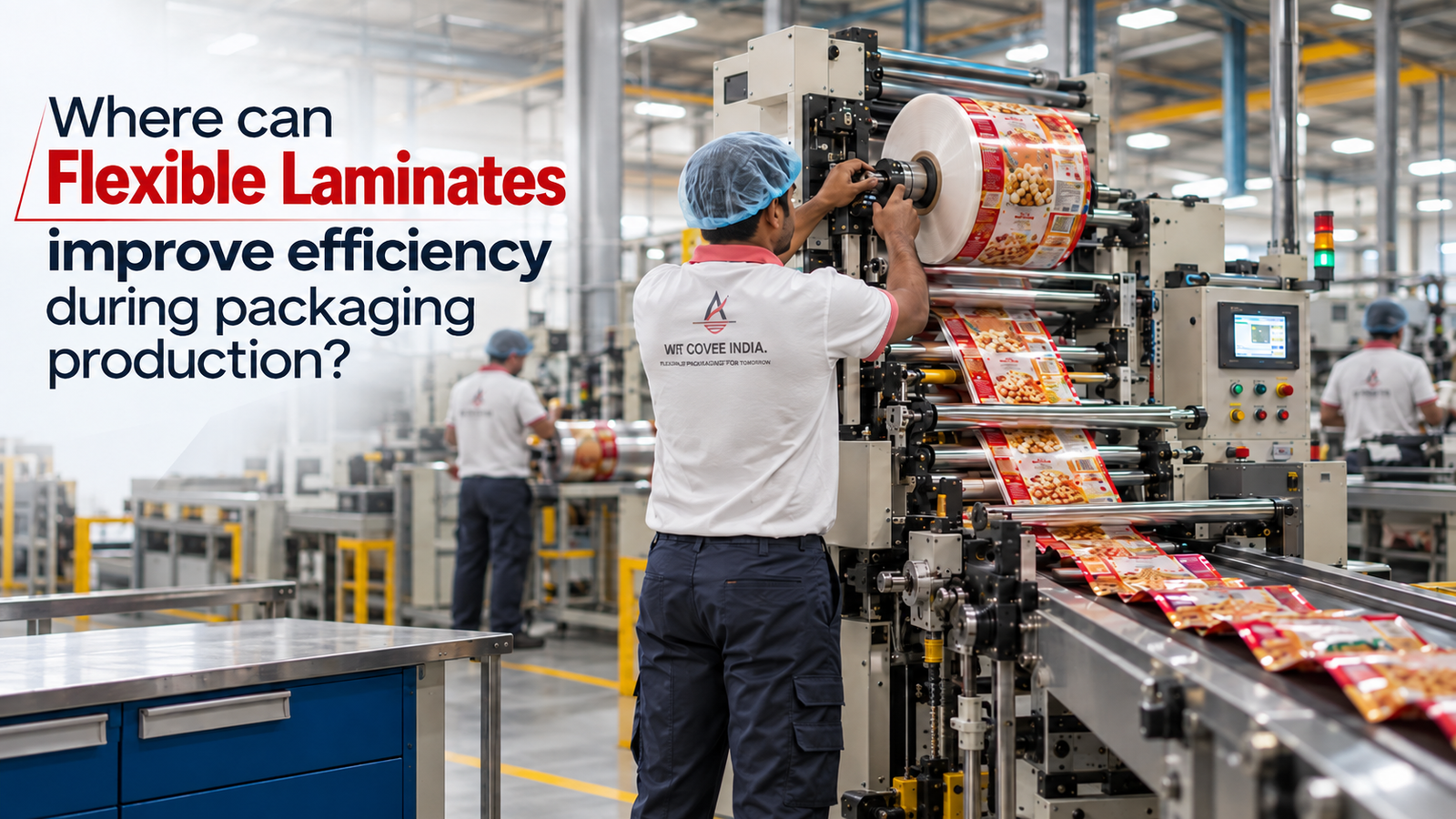
Where can flexible laminates improve efficiency during packaging production?
Packaging production involves several connected stages, from material preparation and printing to filling, sealing, inspection, and dispatch. Flexible Laminates can support efficiency across these stages when the material structure is selected according to the product and production process. The aim is not simply to make packaging faster. It is to create a material that works consistently with machinery while providing the protection the finished product requires.
Ashoka Poly Laminators develops flexible packaging solutions with attention to material structure, product requirements, and practical production needs. For businesses producing pouches and other flexible packs, the right laminate can help reduce avoidable interruptions and make production more predictable.
Begin with the product requirements
The first step is understanding what will be packed.
Powders, grains, snacks, spices, and other products behave differently during filling. Some require stronger moisture protection, while others may need resistance to oxygen, light, or aroma loss.
These requirements influence the laminate structure.
A material selected without considering the product may perform adequately during one production stage but create problems later. Starting with the product helps manufacturers determine which properties are genuinely necessary.
Filling becomes easier with consistent material behaviour
Filling equipment needs packaging material that behaves predictably.
Changes in stiffness, thickness, dimensions, or material handling can affect how a package moves through automated equipment. When the packaging material performs consistently, production teams have a more stable starting point for maintaining the filling process.
Suitable Flexible Laminates can provide the material foundation for pouches and other formats designed around the filling operation.
The exact structure should depend on the product, pack size, filling method, and equipment being used.
Sealing is a major efficiency point
A package is not complete until it is properly sealed.
The sealing layer and overall laminate structure need to work with the equipment and selected process conditions. Temperature, pressure, dwell time, and machine speed can all influence seal performance.
A suitable material can provide a more workable sealing range when properly matched with the production system.
Ashoka Poly Laminators can consider sealing requirements when discussing flexible packaging structures, helping businesses evaluate the material and production process together.
Reliable sealing can reduce rework
Poorly sealed packs can create additional work.
They may need inspection, adjustment, resealing, or rejection. At high production volumes, even a small percentage of defective packs can affect material usage and production time.
The laminate is only one part of seal quality. Equipment condition, machine settings, product contamination, and operator control also matter.
Still, selecting an appropriate structure can help establish a stronger foundation for consistent sealing.
Printing also contributes to production efficiency
Flexible packaging frequently carries product information, branding, instructions, and other important details.
The material surface needs to support the intended printing process and maintain the required appearance. Consistent printing can reduce unnecessary inspection and help avoid rejected packaging.
When several products are manufactured, a reliable printing process can also make packaging changes easier to manage.
At Ashoka Poly Laminators, printing requirements can be considered alongside the packaging structure rather than being treated as a completely separate decision.
Protection after production is equally important
Production efficiency should not be measured only until the package leaves the machine.
The finished package must continue protecting the product during storage and transportation. Depending on the application, this may involve protection against moisture, oxygen, light, contamination, or aroma loss.
A laminate that performs well during production but does not provide the required product protection is not an efficient packaging choice.
This is why Flexible Laminates should be evaluated from production through distribution.
Machine compatibility deserves attention
Changing a packaging material can affect an established production line.
Differences in thickness, stiffness, sealing behaviour, or overall construction may require changes to machine settings. If these factors are ignored, a material change can create unexpected production problems.
Before switching structures, businesses should evaluate how the material will behave with their existing equipment.
Ashoka Poly Laminators can discuss the intended packaging format and production conditions so material selection is connected to the machinery that will process it.
Multiple pack sizes can make production more complex
Many businesses produce the same product in several quantities.
A small pouch and larger pouch may share branding but require different dimensions. These changes can influence material consumption, filling, sealing, artwork placement, and machine settings.
A well-planned packaging structure can make these variations easier to manage.
Where product requirements allow it, related pack sizes may use compatible structures. However, the material should never be standardised at the expense of required barrier or sealing performance.
Material efficiency matters too
More material does not automatically mean better packaging.
An unnecessarily heavy structure can increase material consumption and cost without providing a useful advantage. At the other extreme, reducing material too far can affect strength, sealing, or product protection.
The practical objective is balance.
The chosen structure should provide the required performance without adding unnecessary layers or thickness.
Changeovers can affect output
Packaging lines that handle multiple products may require regular changeovers.
Different designs, dimensions, and material structures can require adjustments to equipment and production settings. A clearly defined packaging specification can make repeat production more predictable.
For businesses with recurring production, consistent Flexible Laminates can also simplify procurement and help production teams become familiar with the material’s behaviour.
The result can be a smoother transition between product runs without compromising application requirements.
Quality checks remain essential
Improving efficiency does not mean reducing quality control.
Finished packs may need to be checked for dimensions, appearance, print quality, and seal integrity. These checks help identify problems before defective packaging moves further into storage or distribution.
At Ashoka Poly Laminators, packaging requirements can be evaluated around the intended application and expected finished-pack performance.
When material and process are properly aligned, quality checks can focus on maintaining consistency rather than repeatedly correcting avoidable material-related issues.
What should buyers discuss with a manufacturer?
A useful packaging discussion should include the complete production process.
Buyers should explain:
- Product type and characteristics
- Pack size and format
- Filling method
- Sealing equipment
- Required barrier properties
- Printing requirements
- Production volume
- Storage conditions
- Transportation requirements
This information allows the packaging manufacturer to understand what the laminate needs to accomplish.
Why the right supplier matters
Material selection becomes easier when the supplier understands the production environment.
Ashoka Poly Laminators can discuss product characteristics, packaging format, printing, sealing, and performance requirements when developing Flexible Packaging Solutions.
This approach helps businesses evaluate the laminate as part of the complete production system rather than as an isolated material.
For repeat packaging requirements, it can also help establish a consistent specification that production and procurement teams can work with.
Final thoughts
Flexible Laminates can improve efficiency across filling, sealing, printing, machine handling, changeovers, and finished-product protection. Their value depends on how well the material structure matches the product and production process.
The best approach is to establish the application’s requirements first and then select a structure that delivers the needed protection and processing performance.
For businesses looking to improve packaging production, the focus should be on consistency, compatibility, and practical performance—not simply adding more material or features.
Ashoka Poly Laminators can help businesses evaluate Flexible Packaging requirements according to their products, equipment, pack formats, and production needs.
Planning a flexible packaging project?
Share your product type, pack format, filling method, sealing process, barrier requirements, and expected production volume with Ashoka Poly Laminators.
Contact Ashoka Poly Laminators
📞 Phone: +91 7078666249
📧 Email: apl@ashokafoam.com

One thought on “Where can flexible laminates improve efficiency during packaging production?”
Add a Comment Cancel reply
Recent Posts

When does packaging need to change as a business moves into new markets?

What role do flexible packaging materials play in product size changes?

[…] different fill quantity can affect dimensions, sealing, filling speed, storage and transportation. Flexible Packaging Materials offer useful adaptability because packaging structures can be developed in different dimensions […]