
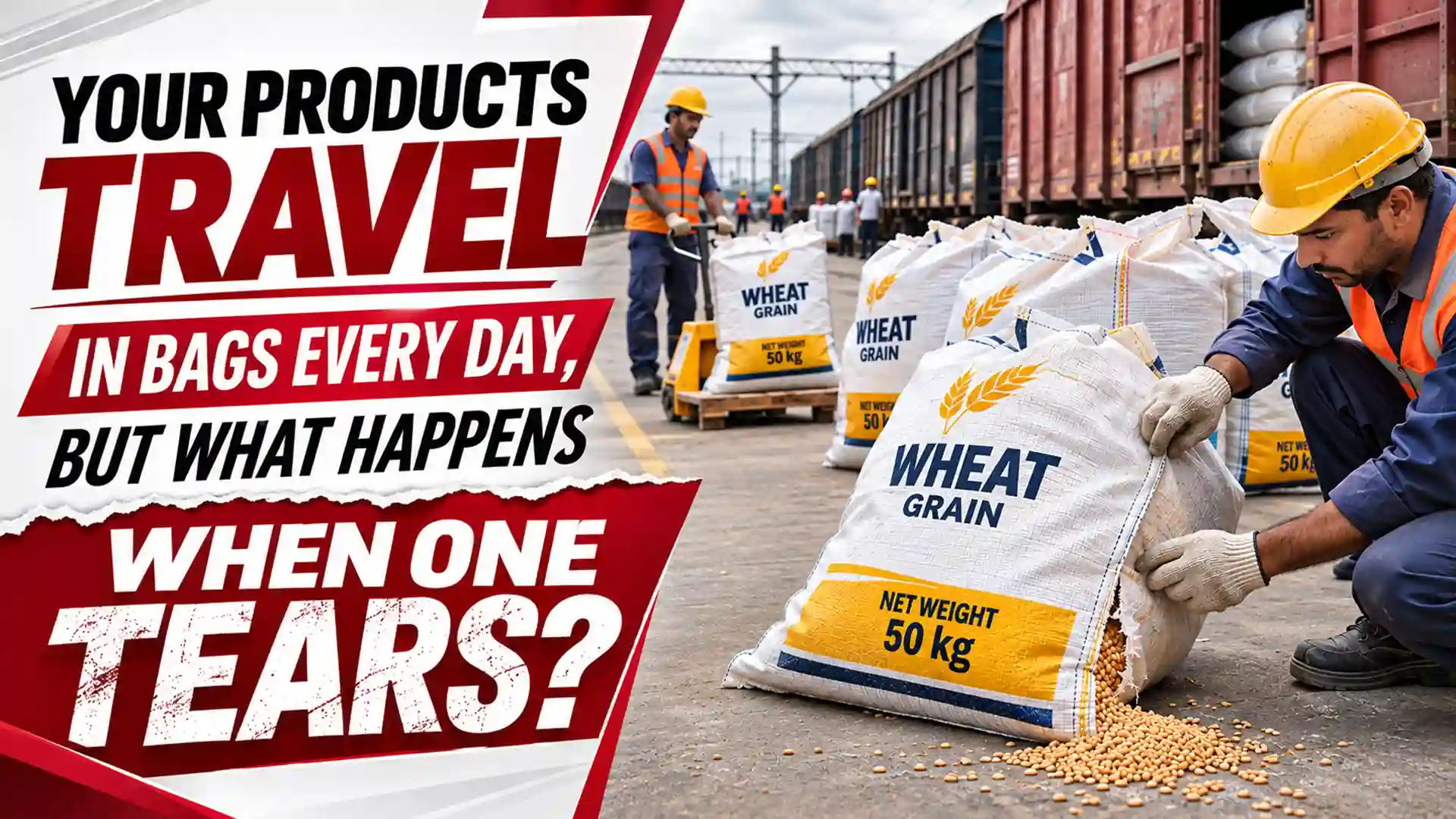
Your products travel in bags every day, but what happens when one tears?
A bag may look perfectly fine when it leaves the warehouse, but its real performance becomes clear when someone lifts it, stacks it, loads it onto a vehicle or transports it over a long distance. If the bag tears during any of these activities, the contents can spill, get damaged or become difficult to recover. For businesses handling agricultural goods, industrial materials and consumer products, packaging failures can create unexpected expenses. Ashoka Poly Laminators understands why suitable bag construction matters when products need to move safely from one location to another.
If you are searching for the Best Packaging Bag Factory in India, you may be wondering what makes one packaging bag more suitable than another. The answer is not simply its appearance or price. Material, fabric construction, stitching, dimensions and intended load all influence how a bag performs during everyday handling.
What happens when a packaging bag tears?
A torn bag can create problems far beyond the damaged packaging itself. Imagine a distributor receiving a shipment of agricultural material with several bags damaged during transportation. The spilled contents may need to be collected, separated and repacked before they can be supplied further.
For businesses, common consequences include:
- Product loss due to spillage.
- Additional labour for cleaning and repacking.
- Damaged goods during warehouse handling.
- Delays in loading and delivery schedules.
- Customer complaints and avoidable returns.
The problem can become more serious when several bags are stacked together. If one bag loses its contents, nearby packages may also become contaminated or difficult to handle.
This is why businesses evaluating the Best Packaging Bag Factory in India should consider how bags perform throughout their actual handling and transportation process.
Why do some packaging bags tear under pressure?
A bag can fail for several reasons. Sometimes the material is unsuitable for the product weight. In other cases, the problem may involve stitching, sharp edges or incorrect handling.
The load is heavier than the bag can handle
Every bag has an intended application and load requirement. Using a bag beyond its suitable capacity can put excessive stress on its fabric and seams.
Weak stitching creates vulnerable points
The seams experience considerable stress when a bag is filled, lifted and moved. Poorly secured stitching can become a weak point even when the main fabric remains intact.
Sharp materials damage the surface
Some industrial and construction materials have rough or sharp edges. If the packaging is not suitable for the contents, friction and pressure may cause damage.
Repeated handling affects the bag
Bags used in warehouses and transportation may be lifted, dragged or stacked several times. Their construction should match the expected handling conditions.
Different products need different types of bags
There is no single packaging bag suitable for every business. The right format depends on what is being packed and how it will be transported.
Agricultural products: Grains, seeds and other bulk materials commonly require bags suitable for filling, stacking and distribution.
Industrial materials: Powders, granules and raw materials need packaging that matches their weight and handling requirements.
Retail products: Printed packaging bags can help businesses present products while providing a format suitable for storage and sale.
Food products: Laminated pouches and flexible packaging are used for different food applications where material suitability, sealing and product protection matter.
BOPP, PP and HDPE woven bags serve different packaging requirements. Businesses exploring the Best Packaging Bag Factory in India should identify their product type and required specifications before selecting a format.
What should you check before ordering packaging bags?
You do not need detailed manufacturing knowledge to identify the basic requirements of your packaging.
- Product weight: Confirm how much material each bag needs to carry.
- Bag dimensions: Make sure the size suits the product quantity and filling method.
- Fabric construction: Understand whether the bag is suitable for the intended load.
- Stitching quality: Check the seams and closure arrangements.
- Transportation conditions: Consider stacking, repeated handling and expected travel distance.
Requesting samples and testing them with the actual product can help identify potential problems before placing a large order.
How Ashoka Poly Laminators connects with packaging requirements
Ashoka Poly Laminators works in the flexible and industrial packaging segment, offering products for different applications. Its range includes BOPP bags, PP woven bags, HDPE woven bags, laminated pouches and flexible laminates.
Businesses can discuss their requirements by sharing product details, filling weight, dimensions, printing preferences and transportation conditions.
For companies comparing the Best Packaging Bag Factory in India, it is useful to understand the specifications of the finished bag rather than relying only on its appearance. Ashoka Poly Laminators can discuss packaging requirements according to the intended application.
The wider APL Packaging Products range connects with different business needs, from consumer packaging to bulk material handling.
Frequently asked questions
1. Why do packaging bags tear during transportation?
Common reasons include excessive load, unsuitable material, weak stitching, sharp contents and rough handling.
2. Are woven bags suitable for bulk materials?
Yes. PP and HDPE woven bags are used for different bulk packaging applications. Their specifications should match the product weight and handling conditions.
3. Does a thicker bag always mean better strength?
No. Material thickness alone does not determine performance. Fabric construction, stitching and overall specifications also matter.
4. What should businesses check before ordering bags?
Product weight, dimensions, material type, stitching, expected quantity and transportation conditions are important considerations.
Give your products packaging suited to their journey
A packaging bag needs to do more than hold a product while it is sitting in a warehouse. It should be suitable for filling, lifting, stacking and transportation.
Ashoka Poly Laminators can discuss your packaging requirements and help you evaluate suitable product specifications.
Phone: +91 7078666249
Email: apl@ashokafoam.com
Contact Ashoka Poly Laminators for packaging enquiries and bulk requirements.

Recent Posts

Ever struggled to open a food packet without spilling its contents?

Your product may look perfect today, but will its packaging protect it tomorrow?