Could tarpaulin bags make bulk goods easier to store between shipments?
Bulk goods do not always move directly from production to their final destination. Sometimes they need to remain in storage while a vehicle is arranged, an order is consolidated, or the next shipment is scheduled. During this waiting period, the packaging has to do more than simply hold the material. It needs to make storage manageable while helping protect the contents from everyday handling and surrounding conditions.
Ashoka Poly Laminators produces packaging solutions for applications where practical storage and handling matter. For businesses evaluating Tarpaulin Bags Manufacturers, the useful question is not simply whether the bag is strong. It is whether its size, construction, protection, and handling characteristics suit the way bulk goods are actually stored between shipments.
When these factors are considered together, the right bag can make temporary storage more organised and easier to manage.
Storage becomes easier when the bag fits the material
Bulk products vary considerably in density, quantity, and physical behaviour.
A bag used for one material may be suitable in size and shape but inconvenient for another. If the bag is too large, the contents may shift unnecessarily. If it is too small, filling and handling can become difficult.
The required dimensions should therefore begin with the product and the quantity being stored. A consistent bag size can also help businesses organise recurring shipments more efficiently.
For companies working with Tarpaulin Bags Manufacturers, discussing the actual fill requirement before production can help establish a more useful specification.
Protection matters even during temporary storage
“Temporary” storage does not necessarily mean a product will remain protected from environmental conditions.
Depending on where the goods are kept, the packaging may encounter dust, moisture, sunlight, humidity, or accidental contact with other materials. The level of protection required depends on the product and the storage environment.
A suitable tarpaulin-based packaging solution can be considered when the contents need an additional layer of protection during storage and movement.
The important point is to match the packaging construction to the conditions the goods are expected to face rather than assuming every stored product needs the same specification.
A well-sized bag can improve warehouse organisation
Storage efficiency is partly a matter of organisation.
When filled bags have consistent dimensions, warehouse teams can more easily plan where and how products will be placed. This can make counting, movement, and shipment preparation more predictable.
The storage area itself also matters. Available floor space, stacking arrangements, access routes, and handling equipment can influence which bag dimensions are practical.
For example, a business preparing several shipments at different times may benefit from a packaging format that allows similar products to be grouped and identified consistently.
Handling between shipments should be considered
Goods waiting for dispatch may still be moved several times.
A bag could be shifted from a production area to a storage location, moved again during inventory management, and then transferred to a vehicle when the shipment is ready.
Every additional movement creates another opportunity for the packaging to experience stress.
This makes the intended handling frequency an important part of the specification. A package designed only around the initial filling stage may not be appropriate if the same goods will be repeatedly moved before dispatch.
Outdoor and indoor storage create different requirements
Where the goods are stored can significantly change the packaging requirements.
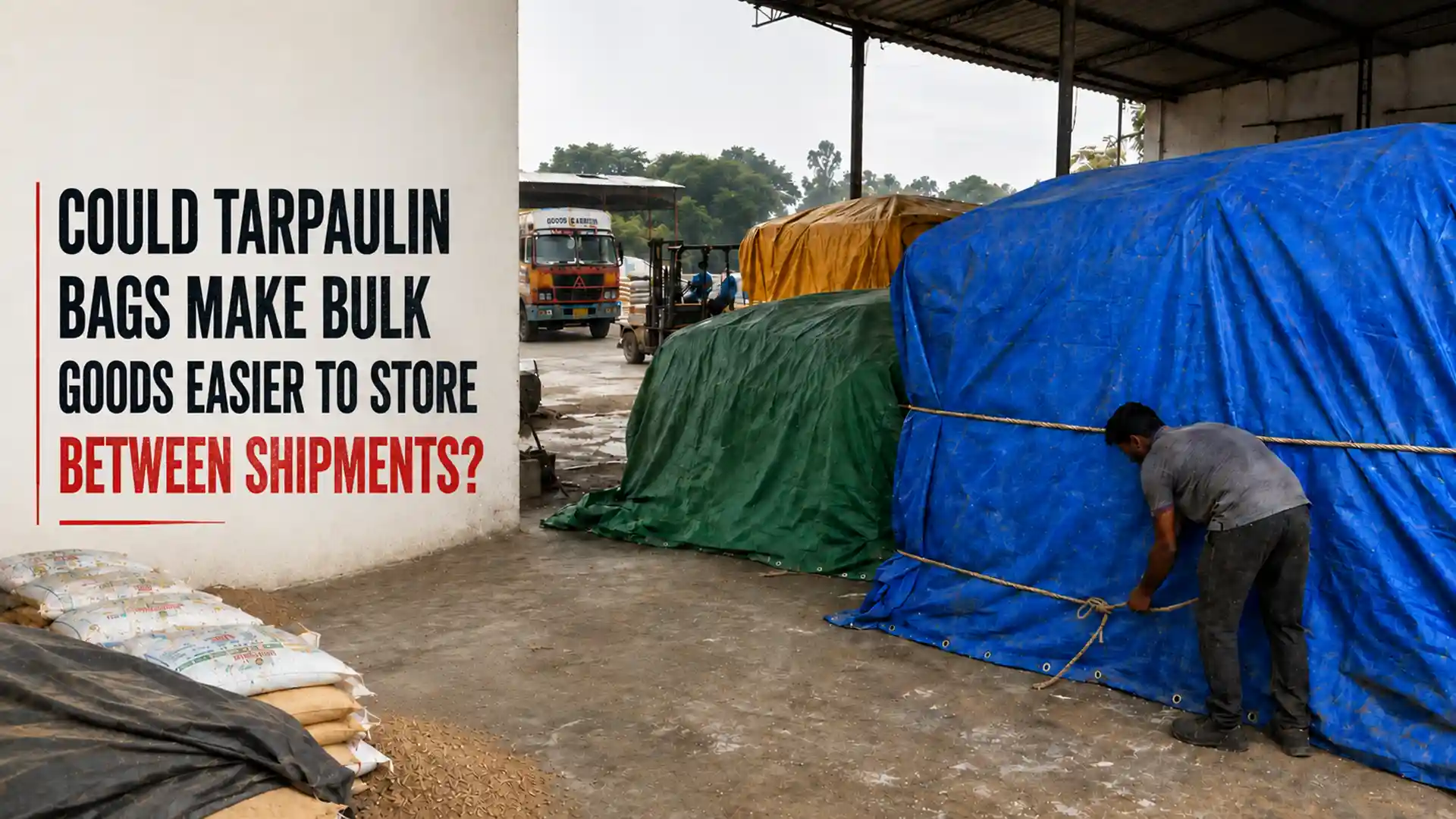
Indoor storage may provide some protection from direct sunlight and rain, while an outdoor or semi-covered area can expose packaging to changing weather conditions.
If the bags are expected to remain outside between shipments, buyers should consider the expected duration and environmental exposure when discussing specifications.
Ashoka Poly Laminators can take the intended application into account when discussing packaging requirements, helping businesses distinguish between occasional temporary storage and repeated exposure to demanding conditions.
The product itself should guide the choice
Not every bulk product needs the same packaging approach.
Agricultural materials, industrial raw materials, construction-related goods, and other bulk products can have different storage requirements. Some may be more sensitive to moisture, while others may mainly require practical containment and handling.
The product’s characteristics should therefore be established before deciding on bag construction.
A useful discussion with Tarpaulin Bags Manufacturers should cover what the bag will contain, how much it will hold, where it will be stored, and how it will be moved.
Repeated shipments can benefit from standard specifications
Businesses that ship similar products regularly often deal with recurring packaging decisions.
If every shipment requires a new discussion about size, construction, or handling, procurement can become unnecessarily time-consuming. Establishing a standard packaging specification can simplify repeat orders.
This does not mean every product should use the same bag.
Instead, each recurring product can have its own defined requirements, allowing future orders to follow an established specification and reducing uncertainty during procurement.
Consider what happens when the shipment is delayed
A useful packaging test is to consider what happens when the expected shipping schedule changes.
If a product needs to remain stored for several additional days or weeks, will the packaging still suit the environment? Will the bags remain practical to move? Can warehouse teams identify and organise the goods easily?
These questions are particularly relevant for businesses dealing with seasonal demand, changing dispatch schedules, or consolidated shipments.
Packaging that accommodates reasonable delays can provide greater operational flexibility.
A practical example from bulk agriculture
Consider an agricultural business preparing a large quantity of material for dispatch.
The goods may be packed before the transport arrangement is finalised. Instead of immediately leaving the facility, the filled bags may remain in a designated storage area until the vehicle becomes available.
During this period, the packaging needs to keep the material contained and make the stock manageable for warehouse or farm workers.
If the same bags are later loaded for transportation, their handling requirements become even more important. The packaging has effectively supported two stages: temporary storage and shipment preparation.
Storage convenience is not just about durability
Durability is useful, but it is only one part of practical storage.
A bag can be physically strong yet inconvenient if its dimensions are unsuitable, difficult to handle, or poorly matched with the available storage arrangement.
Likewise, a highly protective construction may not be necessary for a product stored indoors for a short period.
The better approach is to balance protection, handling, size, storage conditions, and expected usage. This avoids choosing packaging based on one characteristic alone.
What should buyers discuss before ordering?
A clear packaging brief can make supplier discussions more productive.
Before contacting Tarpaulin Bags Manufacturers, buyers should consider:
- What material will be packed?
- What quantity will each bag hold?
- How long will the goods remain in storage?
- Will storage be indoors, outdoors, or semi-covered?
- How often will the bags be moved?
- How will they be loaded and unloaded?
- What dimensions work best for the available storage space?
- Will the same bags also be used during transportation?
These details give the manufacturer a clearer understanding of the complete application.
When manufacturer input becomes valuable
Packaging decisions are easier when they are based on real operating conditions.
Ashoka Poly Laminators can discuss factors such as product type, required dimensions, handling frequency, storage environment, and shipment requirements before the packaging specification is finalised.
This application-led approach helps prevent businesses from selecting a generic bag that may work for filling but create difficulties later during storage or dispatch.
For regular bulk shipments, it can also help establish a consistent specification for future procurement.
Final thoughts
Tarpaulin bags can make bulk goods easier to store between shipments when their design matches the product, storage environment, handling routine, and shipment requirements.
The key is not simply choosing a durable bag. Buyers should consider how the Tarpaulin Manufacturer will behave during the entire period between filling and dispatch, including storage, movement, identification, and eventual loading.
Businesses comparing Tarpaulin Bags Manufacturers should therefore look beyond a basic price comparison and discuss the conditions in which the bags will actually be used.
Ashoka Poly Laminators can help businesses evaluate these application-specific requirements and develop packaging around the practical needs of their bulk goods.
Discuss your bulk packaging requirement
If your products need to remain stored between shipments, share the product type, fill quantity, storage conditions, required dimensions, and expected order volume with Ashoka Poly Laminators.
Phone: +91 7078666249
Email: apl@ashokafoam.com
Request a packaging specification suited to your storage and shipment requirements.

Recent Posts

Festive dispatches are growing—can your tarpaulin handle the journey?

Festive sweets need more than a pretty pouch—what keeps them protected?