How do Indian businesses use PP woven bags across different supply chains?
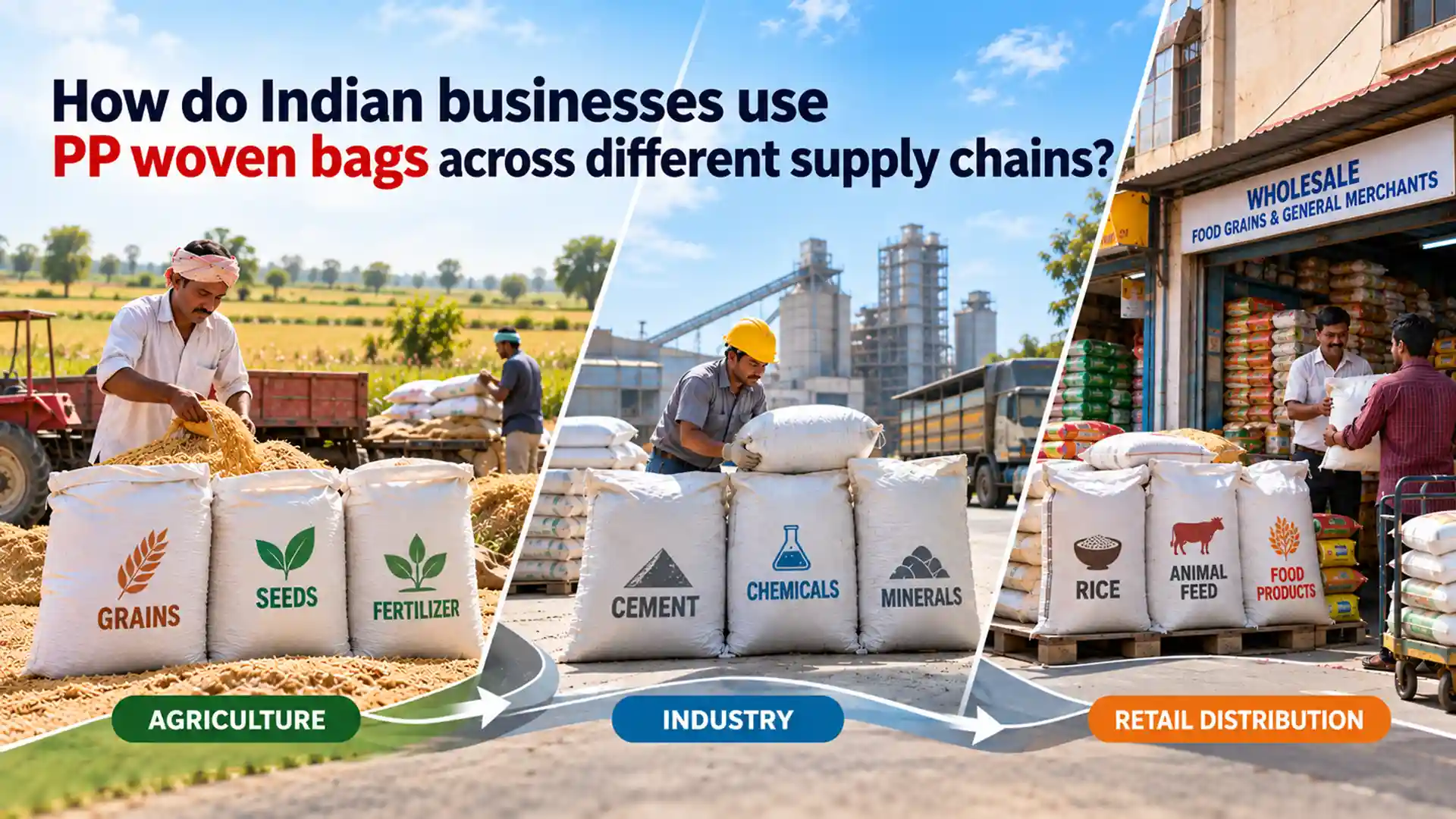
PP woven bags are used across many Indian supply chains because they can provide a practical format for packing, storing and transporting bulk products. Their applications range from agricultural commodities and food-processing materials to industrial goods. A PP Woven Bags Manufacturer in India can adapt bag specifications to suit differences in product weight, filling methods, storage conditions and transportation requirements.
For Ashoka Poly Laminators, packaging selection begins with understanding how the product moves through the supply chain. A bag that works well for one application may not be suitable for another. The right choice depends on what happens from filling and stacking to transportation and final handling.
How agriculture businesses use woven bags
Agricultural supply chains involve several stages. Products can move from farms to processing facilities, warehouses, distributors and commercial buyers before reaching their final destination.
Grains, seeds, pulses, animal feed and similar dry commodities commonly require packaging that is convenient for bulk handling and storage.
At processing facilities, bags may be filled in large quantities and then arranged for temporary or longer-term storage. They are subsequently loaded onto vehicles and handled again at distribution points.
For these applications, businesses need to consider bag dimensions, product weight, filling process and stacking requirements. Ashoka Poly Laminators can be considered when businesses are evaluating packaging around these practical supply-chain conditions.
Food processing brings consistency into focus
Food-processing businesses often operate with established production and distribution systems. Products may be packed continuously and supplied to wholesalers, distributors or institutional buyers.
A consistent packaging format can help maintain uniformity during filling, stacking and transportation.
For example, a processor handling flour, rice or pulses needs packaging that matches its normal pack weight and filling process. The bag also needs to remain practical during warehouse handling and transportation.
Working with a PP Woven Bags Manufacturer in India allows businesses to discuss these requirements before finalizing specifications. Instead of choosing a bag solely by appearance or price, procurement teams can consider how the format will perform throughout the supply chain.
Industrial supply chains require application-based selection
Industrial materials can create different packaging demands.
Products may be heavier, denser or subjected to frequent loading and unloading. Some materials move between manufacturing facilities, warehouses, distributors and industrial customers several times before their final use.
This makes handling conditions particularly important.
Businesses should examine product weight, filling equipment, stacking practices and transportation conditions before selecting a suitable bag specification.
APL Industrial Packaging can be considered from this application-focused perspective, where packaging is assessed as part of the material-handling system rather than as an isolated purchase.
Why the same bag does not fit every application
A common procurement mistake is assuming that one specification can serve every product.
Two businesses may use woven bags for completely different purposes. One may need packaging for agricultural commodities, while another may handle industrial materials. Their requirements for dimensions, construction, printing and handling can therefore differ.
Before ordering, businesses should consider:
- What product will be packed?
- What is the typical pack weight?
- How will the bag be filled?
- How will filled bags be stacked?
- How long will they remain in storage?
- How frequently will they be moved?
- What transportation conditions will they experience?
- Is printed identification required?
These details give a packaging supplier a clearer understanding of the application.
Warehouse operations influence packaging decisions
Packaging performance is closely connected to warehouse organization.
Filled bags need to be moved, stacked and retrieved efficiently. Dimensions that are poorly suited to the available storage arrangement can make these activities less convenient.
For businesses handling high volumes, packaging dimensions should therefore be considered alongside warehouse practices.
A suitable format can support more consistent stacking and easier product identification. APL Packaging Products can be evaluated with these operational factors in mind, particularly when businesses are reviewing their existing bulk-packaging specifications.
Transportation is part of the packaging equation
Once products leave the production facility, packaging continues to play an important role.
Bags may be loaded onto trucks, unloaded at distribution centers, moved within warehouses and handled again before reaching customers. Repeated handling means businesses need to understand the conditions their packaging will experience.
Transportation distance, stacking arrangements and loading methods can all influence the suitability of a particular format.
This is why Ashoka Poly Laminators recommends approaching packaging requirements according to actual usage conditions rather than selecting a specification without considering the supply chain.
Printed bags can simplify product identification
As businesses expand their product range, clear identification becomes increasingly useful.
Printed packaging can help distinguish products, grades, sizes or brands during storage and distribution. This can be particularly valuable when several similar-looking products move through the same warehouse or distributor network.
Printing requirements should be considered alongside production and handling needs. The objective is to create packaging that remains practical while providing useful product identification.
APL Packaging Solutions can be viewed in this broader context, where packaging supports both operational and communication requirements.
When should businesses consider customized bags?
Standard specifications can work well when the product, volume and handling process remain straightforward. Customization becomes more relevant when the existing format repeatedly creates problems.
For example, a business may find that its current dimensions do not work efficiently with filling equipment. Another may need a different size to improve stacking. A growing product range may also require separate formats for different pack weights.
In such situations, a PP Woven Bags Manufacturer in India can discuss whether changes to dimensions, construction or printing would provide a practical improvement.
Customization should have a clear purpose. Businesses should avoid adding specifications that do not solve an actual packaging requirement.
Material selection should follow the product journey
The packaging material should be considered according to how the product will be handled and stored.
Product characteristics, weight, filling method, storage duration and transportation conditions all contribute to the specification.
APL Packaging Materials can be assessed as part of this process, with the emphasis on matching packaging characteristics to the application.
Procurement teams should also provide expected order quantities and usage conditions. This information can make discussions with Ashoka Poly Laminators more precise and help establish realistic packaging requirements.
A practical example from a bulk supply chain
Consider a business processing agricultural commodities for regional distribution.
The product is filled at the processing facility, stored in stacks, loaded onto trucks and delivered to distributors. At the destination, workers unload the bags, move them into storage and eventually supply them to customers.
The packaging therefore needs to function across several different stages.
A bag selected only for its filling performance may not address every requirement. Dimensions, handling characteristics, printing and storage arrangements also need to be considered.
This illustrates why Ashoka Poly Laminators focuses on the complete product journey when discussing packaging requirements.
What procurement teams should discuss with suppliers
Before placing a bulk order, procurement teams can prepare a clear specification covering the most important operational details.
Share the product type, pack weight, desired dimensions, filling process, sealing method, storage conditions and transportation requirements. If the packaging is replacing an existing format, providing a sample can also make the discussion more useful.
For businesses looking for dependable APL Products, the same principle applies: start with the application, identify the actual requirement and then select the appropriate packaging format.
This approach can reduce unnecessary specification changes and make supplier discussions more productive.
Why Ashoka Poly Laminators can be part of the discussion
Choosing a packaging supplier involves more than comparing quotations.
Businesses should consider whether the supplier understands their application and can discuss packaging requirements in practical terms. The supplier should also be able to work with the information provided by the procurement and production teams.
Ashoka Poly Laminators can be approached by businesses reviewing their woven-bag requirements for agricultural, food-processing or industrial applications.
The objective should be a packaging specification that works consistently through filling, storage, transportation and handling.
Conclusion
PP woven bags can support different stages of Indian supply chains, but their requirements are not identical across industries.
Agricultural businesses may focus on bulk handling and storage. Food processors may prioritize consistency across production and distribution. Industrial users may place greater emphasis on handling and transportation conditions.
The best packaging decision starts by understanding the complete journey of the product.
Businesses reviewing their requirements can work with a PP Woven Bags Manufacturer in India to evaluate dimensions, construction, printing and other application-specific factors.
Looking for woven packaging suited to your supply chain? Contact Ashoka Poly Laminators.
Phone: +91 7078666249
Email:apl@ashokafoam.com

Recent Posts
When does packaging need to change as a business moves into new markets?
What role do flexible packaging materials play in product size changes?